Custom CNC Machining Parts for Automotive Repair
Date:2026-06-25Article editor:Starting Point PrecisionViews:411In the fast-paced world of automotive repair, custom CNC machining parts have become a game-changer. Whether you are restoring a classic car or fixing a modern fleet vehicle, precision-engineered components ensure perfect fit, function, and longevity. This article explores how CNC machining revolutionizes repair workflows, with real-world examples, practical tips, and essential links to trusted resources.
Off-the-shelf parts often fall short when dealing with obsolete models, modified engines, or unique performance requirements. Custom CNC machining offers:
● Unmatched precision – Tolerances as tight as ±0.005 mm.
● Material versatility – Aluminum, steel, titanium, brass, and engineering plastics.
● Rapid turnaround – Digital designs go from CAD to finished part in days, not weeks.
● Cost-effectiveness for small batches – Ideal for one-off repairs or limited production runs.
For a deeper dive into material selection, check our internal guide: CNC for Automotive Applications.
Key Applications in Automotive Repair
1. Engine Components
Pistons, cylinder heads, camshafts, and intake manifolds can all be custom-machined to restore or enhance engine performance. For example, a worn valve guide can be replaced with a CNC-machined bronze guide that outlasts OEM versions.
Custom caliper brackets, brake pedal assemblies, and shock absorber mounts are frequently machined for race cars and lifted trucks. Precision here directly impacts safety.
Gear shift forks, clutch release bearings, and differential housings benefit from CNC's ability to create complex geometries with high repeatability.
Even decorative parts like dashboard bezels or emblem inserts can be machined from billet aluminum for a premium custom look.
1. Provide a 3D CAD model (STEP, IGES, or STL) or send a physical part for reverse engineering.
2. Choose your material – consider strength, weight, corrosion resistance, and cost.
3. Define tolerances and surface finish – critical for mating parts.
4. Select a reputable CNC shop with automotive experience.
Pro Tip: Always request a first-article inspection (FAI) report to verify dimensions before full production.
Every custom CNC machined part should undergo rigorous inspection. Common methods include:
● CMM (Coordinate Measuring Machine) checks.
● Hardness and tensile testing.
● Non-destructive testing (dye penetrant or ultrasonic) for critical safety parts.
Our internal quality page explains our process in detail: Quality Control in CNC Machining.
A recent project involved a 1987 Porsche 911 with a cracked throttle body linkage—a part no longer manufactured. Using 3D scanning and custom CNC machining, we reproduced the linkage in 7075-T6 aluminum with improved wear resistance. The result? A perfect fit, restored engine response, and a satisfied customer.
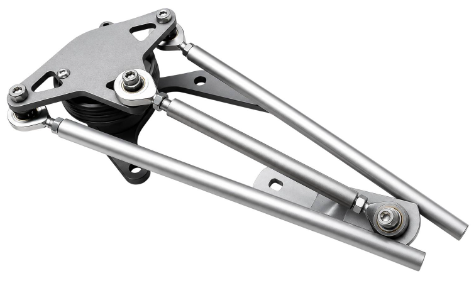
This case highlights why custom CNC parts are indispensable for classic and performance automotive repair.
Custom CNC machining parts empower automotive repair professionals to overcome supply chain gaps, improve performance, and deliver flawless restorations. With modern digital workflows, high-quality materials, and rigorous testing, there has never been a better time to adopt CNC solutions. For your next repair project, consider the precision, speed, and reliability that only custom machining can offer.
Need a custom part? Contact our engineering team today for a free feasibility analysis.
Q1: How long does it take to produce a custom CNC part for automotive repair?
Typical lead times range from 2 to 10 business days, depending on complexity, material, and quantity. Rush services (1–3 days) are often available.
Q2: Can I machine a part without a CAD file?
Yes. Many shops offer reverse engineering services using 3D scanning or manual measurement of your existing part.
Q3: Is custom CNC machining expensive for one-off repairs?
While setup costs are higher than mass production, for a single critical part, it is often cheaper than replacing an entire assembly or scrapping a vehicle. Get a quote upfront.
Q4: What materials are best for high-temperature engine parts?
AISI 4140 steel, Inconel, and titanium are excellent choices. For aluminum applications, 6061-T6 or 7075-T6 are common.
Q5: Do you offer finishing services like anodizing or coating?
Yes, most CNC shops partner with finishing providers for anodizing, powder coating, plating, and heat treatment. Discuss this when ordering.
Add: Building 3No.277 Zhen'an Middle Road, Chang'an Town,Dongguan,Guangdong, China
Tel:+86-769-82855591
Copyright © 2019 All Rights Reserved Dongguan Start Precision Technology Co., Ltd. Tel: +86-769-82855591
Add: No. 277 Zhen'an Middle Road, Chang'an Town, Dongguan, Guangdong, China



 中文版
中文版 English