Custom Robotic Components with Rapid Delivery
Date:2026-10-04Article editor:Starting Point PrecisionViews:171Humanoid robot development moves through frequent design revisions, prototype testing, and mechanical optimization. A delayed component can hold up an entire joint, actuator, or structural assembly. Custom Robotic Components therefore need to combine precision manufacturing with a predictable production schedule.
For humanoid robots, dimensional accuracy is especially important around moving joints, transmission interfaces, sensor mounts, shafts, bearing seats, and lightweight structural parts. Small deviations can affect motion accuracy, vibration, or assembly performance.
What Custom Robotic Components Can Include
Custom CNC machining can support different areas of a humanoid robot, including:
● Joint housings and actuator covers
● Bearing seats and precision mounting plates
● Transmission shafts and coupling components
● Sensor brackets and mounting interfaces
● Lightweight aluminum or titanium structural parts
● Connector bodies and mechanical support components
The geometry, material, tolerance, surface finish, and inspection requirements are defined according to the customer's drawings and 3D models.
How We Control Precision During Machining
Rapid delivery should not mean sacrificing mechanical accuracy. Our approach focuses on identifying the features that directly influence assembly and movement before machining begins.
1. Control of Coaxiality
For rotating humanoid robot components, the relationship between bearing bores, shaft seats, and locating features can be more important than an individual dimensional tolerance.
We establish suitable machining datums and coordinate related features whenever possible. This helps reduce accumulated positioning errors between operations and supports stable coaxiality for rotating interfaces.
2. Control of Assembly Clearance
A humanoid robot joint may contain bearings, shafts, reducers, spacers, covers, and fastening components. Excessive clearance can introduce unwanted movement, while insufficient clearance may create friction or assembly difficulties.
We review mating dimensions together rather than treating each feature independently. Bore diameter, shaft diameter, shoulder position, surface finish, and tolerance zones are considered as part of the complete fit.
3. Inspection and Functional Testing
Inspection focuses on critical dimensions and relationships rather than simply checking overall size.
Depending on the project, verification may include:
● Dimensional inspection of critical bores and mounting surfacesFor high-precision robotic parts, CMM-based inspection can also help verify complex geometric relationships. Industry case studies show that inspection methods must reflect the actual functional mating areas of humanoid robot components. Precision Machining and CMM Inspection Reference
A Faster Path from Drawing to Delivery
Our production process is organized around reducing unnecessary waiting between engineering review, machining, inspection, and shipment.
Drawing Review → Critical Feature Identification → Material Preparation → CNC Machining → Precision Finishing → Dimensional Inspection → Fit or Functional Verification → Final Release
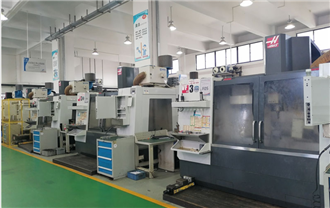
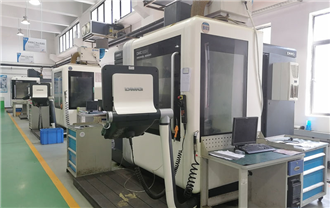
When a design requires complex multi-sided geometry, the machining strategy can be selected according to the component structure and tolerance relationships. Customers can review the available precision manufacturing capabilities through the Start Precision precision machining page.
For the latest production requirements, Start Precision provides CNC machining support for custom components from prototype quantities to production orders.
Example: Fast Delivery for a Humanoid Robot Joint Part
Consider a compact aluminum actuator housing containing a bearing bore, locating step, threaded mounting holes, and a motor interface.
The key challenge is not simply machining the housing quickly. The bearing bore must remain correctly related to the mounting datum, while the motor interface must maintain the required fit with the mating component.
The process can therefore prioritize:
● Stable datum selection for the main bearing interface
● Consolidated machining of related precision features
● Controlled bore and shaft fits
● Inspection of coaxiality and positional relationships
● Trial assembly when required
● Final dimensional verification before shipment
This approach allows rapid delivery to remain connected to actual assembly performance instead of focusing only on machining time.
Why Choose Custom Robotic Components?
A reliable manufacturing partner should understand how individual dimensions affect the complete humanoid robot assembly.
Key advantages include:
● Faster response from prototype to production
● Precision control of critical mating features
● Coaxiality and positional relationship verification
● Fit and functional checks when required
● Support for different engineering materials
● Inspection documentation for critical components
● Production planning focused on delivery reliability
Rapid delivery is most valuable when the supplied parts can move directly into the next stage of robot development without avoidable rework.
Conclusion
For humanoid robot development, Custom Robotic Components must balance speed, dimensional precision, assembly fit, and functional reliability. By controlling coaxiality, managing mating clearances, and verifying critical features before shipment, CNC machining can support fast prototype iteration and dependable production.
Contact us to discuss your manufacturing needs.
Joint housings, actuator parts, shafts, bearing seats, sensor mounts, structural brackets, connector bodies, and other precision mechanical components can be customized from customer drawings or 3D models.
Coaxiality is controlled through suitable datum selection, machining setup planning, accurate tool paths, and dimensional inspection of related cylindrical features.
Yes. Critical mating dimensions can be inspected individually, and trial assembly or fit verification can be arranged when required by the project.
Functional or fit testing can be incorporated when the component's performance depends on movement, mating, rotation, or interaction with another part.
Yes. Prototype and low-volume orders can be planned around the customer's required development schedule while maintaining the specified machining and inspection requirements.
Add: Building 3No.277 Zhen'an Middle Road, Chang'an Town,Dongguan,Guangdong, China
Tel:+86-769-82855591
Copyright © 2019 All Rights Reserved Dongguan Start Precision Technology Co., Ltd. Tel: +86-769-82855591
Add: No. 277 Zhen'an Middle Road, Chang'an Town, Dongguan, Guangdong, China



 中文版
 English