Robotic Parts Manufacturer with CNC Expertise
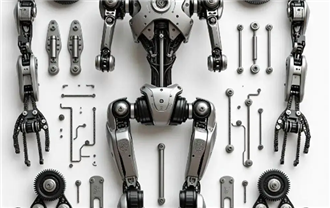
Date:2026-10-17Article editor:Starting Point PrecisionViews:118A Robotic Parts Manufacturer with advanced CNC expertise helps turn humanoid robot designs into accurately machined components that support balance, coordinated movement, structural stability, and compact mechanical assemblies. From lightweight frame connectors to joint housings and transmission components, each part must meet its functional requirements while fitting within the robot’s limited installation space.
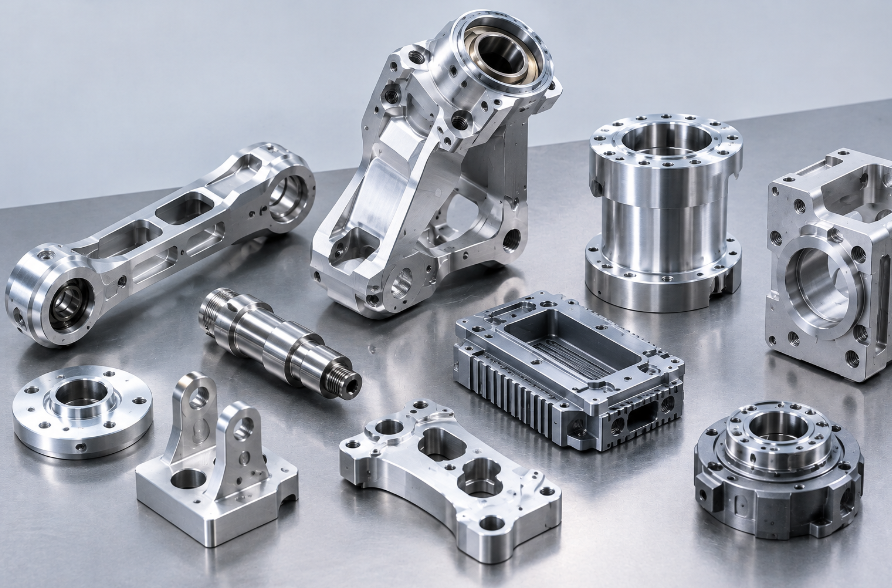
CNC Machining for Humanoid Robot Components
Humanoid robots combine moving joints, structural frames, sensing devices, and compact drive systems. Their components often require precise mounting interfaces, controlled clearances, and consistent dimensions across multiple mating parts.
CNC machining is suitable for producing custom metal components such as:
● Structural connectors: Join frame sections while maintaining alignment and assembly strength.
● Joint housings: Provide accurate mounting surfaces for bearings, actuators, and transmission elements.
● Transmission components: Support controlled motion through accurately machined bores, shafts, and mating features.
● Sensor brackets: Maintain defined sensor positions relative to the robot’s mechanical structure.
● Lightweight frame parts: Use carefully designed pockets and profiles to reduce unnecessary mass without compromising required stiffness.
The appropriate design depends on the component’s load, movement, material, available space, and assembly requirements.
Our CNC Manufacturing Process
A controlled manufacturing route helps reduce dimensional variation and avoid assembly problems during prototype development and repeat production.
1. Drawing Review and DFM Analysis
We review 2D drawings, 3D CAD models, material specifications, tolerances, and critical interfaces. Features that may complicate machining—such as deep pockets, thin walls, intersecting bores, and narrow internal corners—are assessed before production.
2. Material Selection and Preparation
Aluminum alloys can suit lightweight structural components, while steel alloys may be appropriate for highly loaded or wear-sensitive features. Titanium alloys can be considered when their strength-to-weight characteristics justify their higher machining cost. Final selection depends on operating conditions and engineering specifications.
3. CNC Milling and Turning
● CNC milling produces mounting faces, slots, pockets, complex profiles, and bolt patterns.
● CNC turning creates cylindrical components, shafts, shoulders, and concentric features.
● Drilling, reaming, and tapping produce holes and threads for accurate fastening and assembly.
● Multi-axis machining can reduce repeated setups for complex geometries when the part design and equipment allow it.
Cutting parameters, tool geometry, workholding, and machining sequence are selected according to the material and feature requirements.
4. Deburring and Surface Finishing
Edges around drilled holes, machined slots, and intersecting surfaces are carefully finished to eliminate sharp remnants, improve component fit, and ensure smooth assembly.
5. Dimensional Inspection
Critical dimensions, hole positions, flatness, and geometric relationships are checked against the drawing. Depending on part complexity and tolerance requirements, inspection may use calibrated measuring instruments, gauges, or coordinate measuring equipment. Inspection results help verify whether components are ready for assembly.
Equipment and Process Selection
| Manufacturing requirement | Suitable process or equipment |
| Complex mounting faces and pockets | CNC milling center |
| Shafts and rotational features | CNC turning center |
| Accurate holes and threaded interfaces | Drilling, reaming, and tapping |
| Multiple faces with tight positional relationships | Multi-axis machining, where appropriate |
| Critical dimensional verification | Precision measuring equipment or CMM |
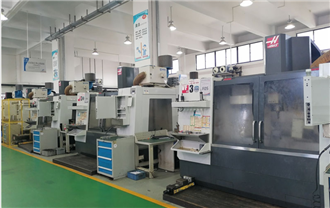
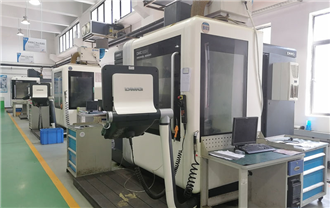
Actual equipment selection depends on part geometry, production volume, material, and required tolerances. See the Start Precision precision machining and equipment information for relevant manufacturing capabilities.
Quality Control for Reliable Robot Assembly
A dimensionally acceptable part must also work with the surrounding components. Our manufacturing approach focuses on features that directly influence assembly and motion:
● Establishing suitable datums for repeatable positioning.
● Controlling bore size, hole location, and mating-surface geometry.
● Considering clamping deformation when machining thin-walled parts.
● Reviewing critical dimensions before finishing operations.
● Verifying specified requirements before parts are released.
For projects requiring repeated batches, consistent setup methods and inspection criteria help maintain interchangeability between components.
For general background on manufacturing processes and engineering materials, consult the NIST manufacturing resources.
Example Application: A Lightweight Humanoid Joint Housing
Consider a custom aluminum joint housing designed to accommodate a bearing, an actuator interface, and several mounting holes. The machining plan begins with datum selection and rough milling, followed by finishing the bearing seat and critical mounting faces. Hole patterns are then machined relative to the established datums, and the component is inspected for bore size, positional accuracy, and flatness.
This sequence helps maintain the relationships between mating features while limiting unnecessary setup changes. The final inspection criteria must follow the customer's drawing and assembly requirements.
Custom CNC Support for Humanoid Robotics
From prototype parts to repeat orders, manufacturing support should reflect the robot’s mechanical design, material requirements, and production stage. Visit Start Precision to explore CNC manufacturing services and discuss custom component requirements.
Contact us to discuss your manufacturing needs. Share your drawings, materials, tolerances, and expected quantities so the appropriate machining process can be evaluated.
Frequently Asked Questions
1. What parts can a CNC manufacturer produce for humanoid robots?
A CNC manufacturer can produce structural connectors, joint housings, shafts, bearing seats, sensor brackets, mounting plates, and other custom metal components for humanoid robots.
2. Which materials are suitable for humanoid robot parts?
Aluminum alloys are commonly considered for lightweight structures. Steel may suit highly loaded or wear-resistant features, while titanium alloys may be selected for applications requiring a favorable strength-to-weight ratio.
3. How do you maintain precision during CNC machining?
Precision is supported by datum planning, suitable workholding, controlled machining sequences, tool selection, and dimensional inspection. Critical tolerances should be defined by the component drawing and assembly requirements.
4. Can you manufacture custom prototypes and repeat batches?
Custom CNC machining can support prototype development and repeat production. The process and inspection plan should be adjusted to the component geometry, order quantity, and consistency requirements.
5. What information is needed for a CNC machining quotation?
Provide a 2D drawing or 3D CAD model, material specification, critical tolerances, surface-finish requirements, quantity, and any special inspection or finishing requirements.
Add: Building 3No.277 Zhen'an Middle Road, Chang'an Town,Dongguan,Guangdong, China
Tel:+86-769-82855591
Copyright © 2019 All Rights Reserved Dongguan Start Precision Technology Co., Ltd. Tel: +86-769-82855591
Add: No. 277 Zhen'an Middle Road, Chang'an Town, Dongguan, Guangdong, China



 中文版
 English