Copper CNC Machining for Mass Production
Date:2026-10-05Article editor:Starting Point PrecisionViews:157Copper is widely selected for components that require excellent electrical conductivity, thermal transfer, and corrosion resistance. Typical applications include electrical terminals, busbars, connectors, heat-transfer components, electrodes, and precision conductive parts.
For mass production, however, producing one accurate copper part is not enough. Hundreds or thousands of parts must maintain consistent dimensions, surface quality, and functional performance. Because copper is relatively soft and ductile, machining can generate burrs, long chips, tool adhesion, and surface deformation if the process is not carefully controlled.
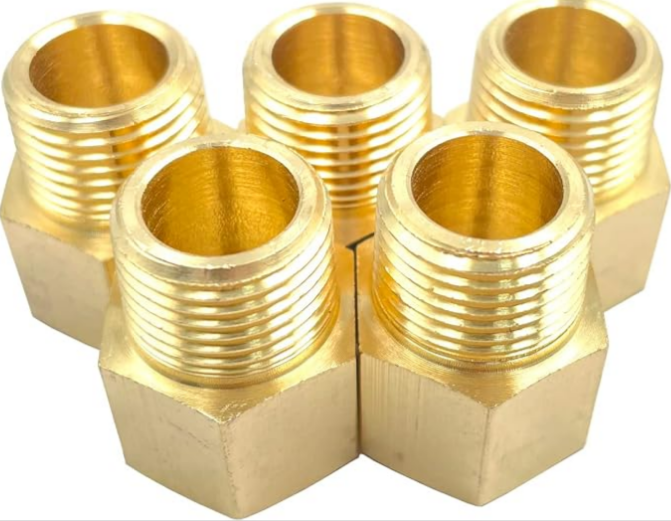
A reliable production strategy should focus on repeatability rather than simply increasing cutting speed.
● Material consistency: The specified copper grade and temper should remain consistent throughout the production batch.
● Stable tooling: Sharp cutting tools and controlled tool wear help maintain dimensional accuracy.
● Efficient chip control: Proper cutting conditions reduce long chips and prevent them from damaging machined surfaces.
● Controlled workholding: Copper can be marked or distorted by excessive clamping force.
● In-process inspection: Critical dimensions should be monitored during production instead of waiting until the entire batch is complete.
The Copper Development Association provides machining guidance for copper and copper alloys, including recommendations related to cutting conditions and tool geometry.
Material selection should match the actual function of the component.
| Copper Grade | Main Advantage | Typical Production Use |
| C101 | High conductivity and purity | Electrical and thermal components |
| C110 | Excellent electrical and thermal conductivity | Busbars, terminals, heat-transfer parts |
| C145 | Improved machinability | Precision machined conductive parts |
| C147 | Good machinability and conductivity | Connectors and electrical components |
Free-machining copper alloys can be particularly useful when large quantities of machined components are required. Copper alloy data from the Copper Development Association identifies grades such as C145 and C147 as free-machining copper materials.
A production-ready machining process begins with the engineering requirements rather than simply copying a prototype process.
1. Drawing and DFM Review
Critical tolerances, wall thicknesses, holes, threads, surface requirements, and datum structures are reviewed before production.
2. Material Preparation
The approved copper grade is verified before machining. Stock dimensions are selected to reduce unnecessary material removal.
3. CNC Process Optimization
Turning, milling, drilling, threading, and other operations are arranged to reduce unnecessary setups and improve repeatability.
4. Tool and Fixture Control
Dedicated or optimized fixtures can improve positioning consistency across large batches. Tool wear is also monitored to prevent gradual dimensional drift.
5. Deburring and Surface Protection
Copper edges and openings are carefully deburred without damaging functional surfaces. Additional finishing or plating can be applied when required by the drawing.
6. Final Inspection
Critical dimensions, threads, flatness, surface condition, and appearance are checked before batch release.
For manufacturers planning production quantities, stable cycle time is also important because small reductions in machining and handling time can significantly affect overall production cost.
Copper CNC machining can support many industries where conductivity and dimensional accuracy are both important:
● Electrical equipment: terminals, busbars, conductive blocks, and contact components
● Thermal management: cooling components, heat-transfer parts, and thermal interfaces
● Electronics: precision connectors, conductive housings, and RF-related components
● Power systems: current-carrying components and electrical connection hardware
● Industrial equipment: electrodes, fittings, shafts, and specialized copper components
For production projects requiring customized dimensions or complex geometries, Start Precision provides a suitable manufacturing resource for reviewing CNC machining requirements and production needs.
Mass production requires more than final inspection. A stable quality system should control the process throughout the batch.
Important checkpoints include:
● Incoming material verification
● First-piece dimensional inspection
● Tool wear monitoring
● In-process measurement of critical features
● Batch sampling
● Final dimensional and visual inspection
● Packaging protection against scratches, contamination, and deformation
This approach helps reduce batch variation and makes production results more predictable.
Copper CNC Machining for Mass Production requires a balance between conductivity requirements, machining efficiency, dimensional control, and repeatability. Selecting the right copper grade, optimizing tooling and fixtures, controlling burrs and chips, and applying systematic inspection can help manufacturers achieve reliable production results.
For copper components requiring consistent quality and scalable CNC production, contact usto discuss your manufacturing needs.
1. What copper grades are suitable for CNC mass production?
C101 and C110 are commonly selected when high conductivity is the priority, while grades such as C145 and C147 can offer improved machinability for production applications.
Copper is soft and ductile, which can lead to long chips, burr formation, tool adhesion, and surface smearing. Proper tooling and cutting conditions are therefore important.
Yes. With appropriate fixtures, tooling management, process control, and inspection procedures, CNC machining can support high-volume copper production.
Optimizing part design, reducing unnecessary setups, selecting an appropriate copper grade, improving cycle time, and controlling tool wear can all help reduce production costs.
Provide the 2D drawing or 3D CAD file, copper grade, quantity, tolerances, surface requirements, finishing specifications, and any inspection or packaging requirements.
Add: Building 3No.277 Zhen'an Middle Road, Chang'an Town,Dongguan,Guangdong, China
Tel:+86-769-82855591
Copyright © 2019 All Rights Reserved Dongguan Start Precision Technology Co., Ltd. Tel: +86-769-82855591
Add: No. 277 Zhen'an Middle Road, Chang'an Town, Dongguan, Guangdong, China



 中文版
 English