Aluminum Robot Parts Batch CNC Machining for Humanoid Robotics
Date:2026-09-23Article editor:Starting Point PrecisionViews:172As the humanoid robotics industry transitions from research labs to commercial pilot production, the demand for lightweight, durable, and highly precise components has skyrocketed. Among the various materials available, aluminum has emerged as the gold standard for structural framing and actuator housings. This article explores the technical nuances of Aluminum Robot Parts Batch CNC Machining and how it enables the next generation of bipedal and humanoid machines.
In humanoid robotics, weight is the enemy of efficiency. Every gram added to a limb increases the torque required from the actuator, draining battery life and reducing agility. Aluminum alloys, particularly 6061-T6 and 7075-T6, offer an exceptional strength-to-weight ratio.
Key Advantage: Aluminum provides the structural rigidity needed for walking gaits while keeping the total mass low enough for dynamic movement.
Furthermore, aluminum offers excellent thermal conductivity, which helps dissipate heat generated by high-torque servo motors packed tightly into the robot's joints.
While prototyping is about proving a concept, batch production is about consistency. When manufacturing humanoid robots, you are not just making one arm; you are making hundreds of identical limbs that must function in perfect synchronization.
● Tolerance Consistency: Every part must fit perfectly. Deviations in one batch can lead to assembly failures in the next.
● Surface Finish: For aesthetic and functional reasons, a consistent surface finish (Ra) is required.
● Lead Time: Speed to market is crucial. Batch production requires a shop that can scale quickly.
To achieve the complex geometries of humanoid joints—such as the hip, knee, and shoulder assemblies—advanced multi-axis machining is essential.
| Feature | Requirement for Humanoid Robots | Machining Solution |
| Geometry | Organic shapes, hollow structures | 5-Axis CNC Milling |
| Tolerance | ±0.01mm | High-Precision CNC Turning & Milling |
| Material | 7075, 6061, 2024 Aluminum | Custom Tooling & Coolant Management |
| Finish | Anodizing, Bead Blasting | Surface Treatment Integration |
For complex parts like custom liquid cooling connectors, which are increasingly used in high-performance computing modules within robots, the ability to machine internal channels with high precision is vital.
When preparing for domestic substitution robot CNC parts supplier selection, engineers must consider DFM principles early. Batch machining aluminum requires specific design considerations:
1. Wall Thickness: Thin walls are prone to vibration during milling. Maintaining a minimum wall thickness helps ensure dimensional stability.
2. Internal Corners: Designers should specify corner radii that match standard tooling sizes to avoid unnecessary custom tool costs and machining time.
3. Tolerancing: Over-tolerancing is the most common mistake.

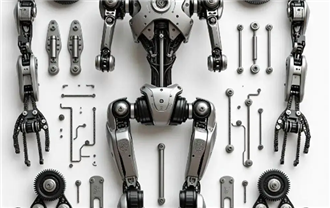
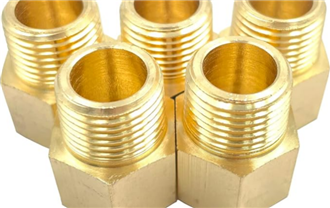
Caption: Precision CNC machining parts of aluminum components for humanoid robot joints
In batch production, statistical process control (SPC) is non-negotiable. Manufacturers must utilize Coordinate Measuring Machines (CMM) and optical comparators to verify dimensions. For humanoid robots, where parts are often serialized, traceability is key. If a defect is found in one unit, the manufacturer must be able to trace it back to the specific batch and machine.
According to research from the Aluminum Association, the demand for high-strength aluminum in automation is growing annually, driving innovations in machining speeds and tool life.
Aluminum Robot Parts Batch CNC Machining is the backbone of the humanoid robotics supply chain. By leveraging advanced 5-axis technology and rigorous quality control, manufacturers can deliver the precision and consistency required for the robots of tomorrow. Whether you are scaling up from a prototype or redesigning for mass production, choosing the right manufacturing partner is critical.
Contact us to discuss your manufacturing requirements.
1. What is the best aluminum alloy for humanoid robot structural parts?
For most structural components, 7075-T6 is preferred due to its high strength, though 6061-T6 is a cost-effective alternative for less stressed parts. The choice often depends on the specific load-bearing requirements of the joint.
2. Can CNC machining handle the complex geometry of humanoid robot hands?
Yes. With 5-axis simultaneous machining, it is possible to create the intricate finger segments and palm structures required for dexterous manipulation, reducing the need for assembly from multiple small parts.
3. How does batch CNC machining differ from 3D printing for robot parts?
While 3D printing is excellent for rapid prototyping, CNC machining offers superior material properties, better surface finishes, and higher dimensional accuracy for end-use production. For metal parts that must withstand repeated stress, CNC is the superior choice.
4. What is the typical lead time for batch production of aluminum robot parts?
Lead times vary by complexity and quantity. For standard batch sizes (e.g., 100-500 units), a lead time of 2-4 weeks is typical for a specialized CNC manufacturer, depending on material availability.
Add: Building 3No.277 Zhen'an Middle Road, Chang'an Town,Dongguan,Guangdong, China
Tel:+86-769-82855591
Copyright © 2019 All Rights Reserved Dongguan Start Precision Technology Co., Ltd. Tel: +86-769-82855591
Add: No. 277 Zhen'an Middle Road, Chang'an Town, Dongguan, Guangdong, China



 中文版
 English