CNC Machining Partner: Flexible Capacity for Peak Seasons
Date:2026-10-24Article editor:Starting Point PrecisionViews:32Why Flexible CNC Capacity Matters
A reliable CNC Machining Partner helps manufacturers respond to seasonal order surges without compromising dimensional accuracy or delivery commitments. When demand rises unexpectedly, limited machine availability, extended setup times, and inspection bottlenecks can disrupt the entire supply chain. Flexible machining capacity provides a practical way to manage these challenges while maintaining production consistency.
Instead of investing immediately in additional machinery, manufacturers can work with an experienced machining supplier to adjust production schedules, allocate suitable equipment, and scale order quantities according to actual demand.
How Flexible CNC Production Supports Peak Seasons
Effective capacity management requires more than adding machine hours. It involves coordinating engineering, machining, material supply, and quality inspection.
● Capacity planning: Review forecast volumes, delivery dates, and existing production commitments before peak periods begin.
● Process optimization: Standardize setups, select suitable cutting tools, and refine CNC programs to reduce non-cutting time.
● Flexible order quantities: Arrange prototype runs, small batches, and repeat production according to changing demand.
● Quality consistency: Maintain documented inspection procedures when production volume increases.
● Production coordination: Track material availability, machining progress, and downstream finishing to identify delays early.
CNC Equipment and Machining Processes
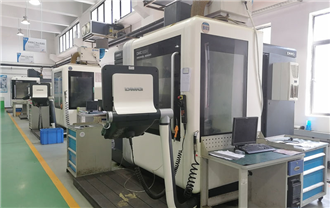
Different components require different equipment. Matching each part to the appropriate machine helps improve throughput while controlling machining costs.
| Equipment or Process | Typical Application | Peak-Season Benefit |
| Five-axis machining center | Complex surfaces, angled holes, multi-face components | Reduces repeated setups |
| Vertical machining center | Housings, brackets, plates, and precision milled parts | Supports flexible milling schedules |
| CNC turning center | Shafts, bushings, pins, and cylindrical parts | Enables repeatable production of rotational components |
| Wire EDM | Narrow slots, intricate profiles, and precision contours | Handles features difficult to machine conventionally |
| Grinding and dimensional inspection | Precision finishing and tolerance verification | Supports final accuracy and quality control |
A suitable process route may include drawing review, material preparation, datum selection, rough machining, semi-finishing, finish cutting, deburring, surface treatment, and dimensional inspection.
Explore Start Precision's machining capabilities and precision equipment list to review relevant equipment and processes. For additional technical background, the National Institute of Standards and Technology's research on machining and measurement process planning discusses coordination across manufacturing activities.
A Practical Strategy for Managing Production Peaks
A structured workflow can make capacity adjustments more predictable:
1. Forecast demand: Identify high-priority components and estimate required quantities.
2. Confirm materials: Check stock availability, material specifications, and replenishment lead times.
3. Prepare production: Complete drawing reviews, CAM programming, tooling selection, and fixture planning.
4. Allocate machine time: Group similar jobs where practical and assign suitable machines based on geometry and tolerance.
5. Monitor quality: Use first-article verification and in-process checks to detect deviations before they affect large batches.
6. Coordinate delivery: Schedule finishing, final inspection, packaging, and shipment against agreed milestones.
Example: Scaling Production for a Seasonal Order Surge
Consider a manufacturer of industrial equipment that receives a sudden increase in orders for aluminum mounting brackets and precision steel shafts before its customers' annual production cycle.
The purchasing team faces a short delivery window and cannot rely on its existing machining schedule alone. A flexible supplier can review both component drawings, allocate milling capacity to the brackets, and schedule turning operations for the shafts. Similar parts can be grouped to reduce setup changes, while inspection checkpoints verify critical dimensions before subsequent operations.
This illustrative scenario shows how coordinated machining and scheduling can help accommodate higher demand without treating every order as an emergency. Actual lead times depend on quantities, materials, tolerances, and available capacity.
Choose a CNC Machining Partner for Long-Term Flexibility
Peak-season readiness begins with clear communication, realistic capacity planning, and a machining process designed around part requirements. A dependable supplier should be able to discuss production volume, technical risks, inspection needs, and delivery priorities before accepting an order.
Visit Start Precision to learn more about its precision manufacturing services.
Contact us to discuss your manufacturing needs and explore a machining plan suited to your component specifications and production schedule.
Frequently Asked Questions
1. What should a CNC machining partner provide during peak seasons?
A suitable partner should offer realistic capacity planning, appropriate machining equipment, material coordination, consistent quality inspection, and clear delivery communication.
Yes. Depending on available capacity and part complexity, suppliers can support prototypes, small production runs, and larger repeat orders. Confirm minimum quantities and lead times before production.
CNC milling, CNC turning, five-axis machining, and suitable automated setups can improve efficiency. The best choice depends on component geometry, material, tolerances, and batch size.
Share forecasts and drawings early, confirm raw materials, approve first articles promptly, and coordinate machining with finishing and inspection schedules.
Reserve capacity as soon as forecasts become reasonably reliable. Lead times vary by material availability, order volume, machining complexity, and current workload.

Add: Building 3No.277 Zhen'an Middle Road, Chang'an Town,Dongguan,Guangdong, China
Tel:+86-769-82855591
Copyright © 2019 All Rights Reserved Dongguan Start Precision Technology Co., Ltd. Tel: +86-769-82855591
Add: No. 277 Zhen'an Middle Road, Chang'an Town, Dongguan, Guangdong, China



 中文版
 English