Custom Titanium CNC Machining Parts with High Strength
Date:2026-06-26Article editor:Starting Point PrecisionViews:399In high-stakes engineering, the shift toward custom titanium CNC machining parts with high strength is undeniable. From jet turbine mounts to orthopedic spinal rods, titanium's unique metallurgical properties enable designs that are simultaneously lighter and more durable than steel alternatives. However, transforming this recalcitrant alloy into precision components demands a mastery of tooling physics, thermal management, and rigid machine dynamics.
Titanium Grade 5 (Ti-6Al-4V) remains the workhorse for structural applications, offering a tensile strength of over 1,100 MPa while maintaining a density just 60% that of steel. To ensure material integrity, reputable suppliers source billet that strictly conforms to ASTM B348 specifications. For medical implants, where fatigue life is critical, compliance with ISO 5832 is non-negotiable, dictating strict limits on interstitial elements like oxygen and iron.
Titanium’s poor thermal conductivity—roughly 1/6th that of aluminum—means that cutting heat concentrates at the tool edge rather than dissipating into the chip. This accelerates crater wear and can lead to catastrophic tool failure if feed rates are not optimized. To combat this, leading workshops adopt tooling strategies recommended by Sandvik’s titanium machining best practices, utilizing carbide inserts with AlTiN nano-coatings and high-pressure (over 70 bar) through-spindle coolant.
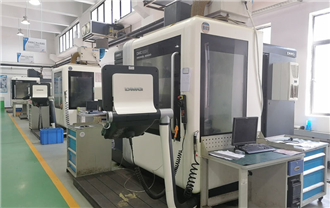
Every high-strength titanium part undergoes rigorous non-destructive testing. After machining, components are inspected via CMM (coordinate measuring machines) for geometric tolerancing, while ultrasonic testing verifies the absence of subsurface voids. Leading providers integrate these QA checkpoints directly into the production workflow. For instance, Startprecision employs in-machine probing to correct tool wear offsets in real time, ensuring that every critical feature remains within the ±0.005 mm tolerance band.
Looking ahead, hybrid machining centers that combine additive DED (Directed Energy Deposition) with subtractive milling are starting to reduce raw material waste—a significant cost factor given titanium's high billet price. Simultaneously, AI-driven adaptive control systems are being deployed to monitor spindle vibration and acoustic signatures, automatically adjusting feed rates to prevent chatter. These innovations are steadily lowering the barrier to entry for mid-volume production runs, making custom titanium components more accessible than ever before.
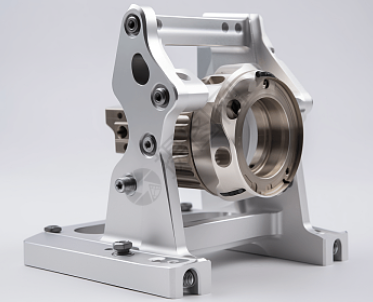
Case 1: Aerospace Engine Brackets
A major aerospace tier-1 supplier needed to replace heavy steel brackets with titanium equivalents for a next-gen narrow-body jet. The challenge involved machining thin webs (1.2 mm thickness) without distortion. By employing a 5-axis simultaneous contouring strategy and custom vacuum fixtures, the machining partner achieved flatness within 0.02 mm across a 300 mm span. The resulting weight saving per aircraft exceeded 12 kg, directly improving fuel efficiency. For similar high-complexity projects, explore the capabilities offered at Startprecision.
Case 2: Motorsport Push-Rods
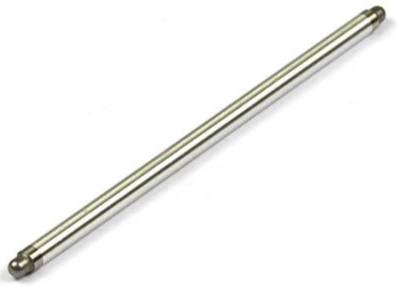
A Formula 2 racing team required high-strength titanium push-rods with integrated spherical bearing housings. The parts experienced cyclic loads exceeding 8,000 N during high-speed cornering. The manufacturer used a twin-spindle lathe with synchronized live tooling to complete the thread rolling and radius turning in a single setup. This eliminated re-chucking errors and guaranteed concentricity within 5 microns, resulting in zero failures over an entire racing season.
Case 3: Subsea Connector Housings
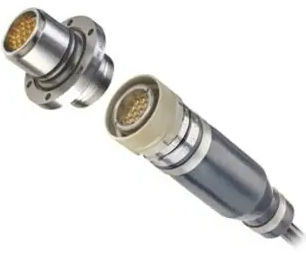
For an offshore oil & gas client, titanium was chosen for its exceptional seawater corrosion resistance. The custom connector housings featured deep internal bores with a 10:1 length-to-diameter ratio. Peck drilling with variable retract heights—combined with a custom carbide reamer—produced a surface finish of Ra 0.8 µm, eliminating the need for secondary honing and reducing per-part production time by 22%.
1. Can you machine thin-walled titanium tubes without deformation?
Yes, but it requires specialized fixtures like expanding mandrels or low-melting-point alloy potting to support the walls during cutting. Using sharp, positive-rake inserts also minimizes radial cutting forces.
2. What is the standard lead time for a prototype titanium part?
For a simple prototype (1–5 pieces), typical lead times are 5 to 7 business days. Complex geometries with 5-axis surfacing may extend this to 10–12 days due to slower machining speeds.
3. Do titanium parts require heat treatment after CNC machining?
Most Grade 5 components are supplied in the annealed or solution-treated and aged (STA) condition. Stress-relief annealing at 480–650°C is often recommended after heavy roughing to stabilize dimensions before final finishing.
4. How does the cost of titanium machining compare to stainless steel 316?
Titanium machining costs are generally 3–5 times higher due to slower cutting speeds (30–60 m/min vs. 150–200 m/min for steel) and increased tool wear. However, the reduced weight and superior fatigue life often justify the premium.
5. What documentation is provided with a certified shipment?
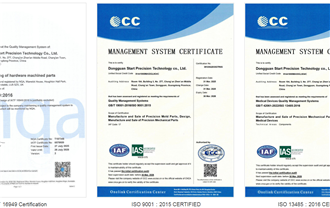
Reputable suppliers like Startprecision include a comprehensive package: mill test reports (MTR), chemical analysis certificates, CMM inspection logs, and a first-article inspection (FAI) report per AS9102 standards when required.
Add: Building 3No.277 Zhen'an Middle Road, Chang'an Town,Dongguan,Guangdong, China
Tel:+86-769-82855591
Copyright © 2019 All Rights Reserved Dongguan Start Precision Technology Co., Ltd. Tel: +86-769-82855591
Add: No. 277 Zhen'an Middle Road, Chang'an Town, Dongguan, Guangdong, China



 中文版
中文版 English