Robot Joint Parts in Lightweight Alloys
Date:2026-09-30Article editor:Starting Point PrecisionViews:205As humanoid robots transition from research labs to real-world applications, the demand for advanced materials that balance strength, durability, and low weight has never been greater. The joints—responsible for movement, precision, and load-bearing—are among the most critical components. This article explores how lightweight alloys, particularly aluminum and magnesium, are revolutionizing robot joint parts and driving the evolution of humanoid robotics.
Humanoid robots must mimic human motion while maintaining energy efficiency, stability, and safety. Every gram saved in the joint assembly translates to reduced inertia, longer battery life, and improved dynamic response. Lightweight alloys offer an optimal combination of mechanical properties that meet these demanding requirements.
Key Benefits of Lightweight Alloys in Robot Joints:
● Reduced inertia for faster, more precise movements
● Higher payload-to-weight ratio for enhanced performance
● Lower energy consumption extending operational time
● Improved safety in human-robot collaboration
● Corrosion resistance for long-term reliability
Aluminum alloys, particularly the 7075 and 6061 series, have become the preferred choice for humanoid robot joint housings, brackets, and structural components. Their excellent strength-to-weight ratio, machinability, and cost-effectiveness make them ideal for high-volume production.
| Property | Aluminum 7075-T6 | Aluminum 6061-T6 |
| Tensile Strength | 572 MPa | 310 MPa |
| Yield Strength | 503 MPa | 276 MPa |
| Density | 2.81 g/cm³ | 2.70 g/cm³ |
| Fatigue Resistance | Excellent | Good |
| Machinability | Good | Excellent |
| Typical Joint Applications | Load-bearing brackets, actuator housings | Sensor mounts, covers, linkage arms |
For complex geometries and tight tolerances, CNC machining services play a vital role in transforming these alloys into precision joint components.
Magnesium is the lightest structural metal, with a density approximately 35% lower than aluminum. AZ91 and AM60 magnesium alloys are increasingly used in humanoid robot joints where every gram counts.
Advantages of Magnesium in Robot Joints:
● Superior weight reduction – up to 35% lighter than aluminum
● Excellent damping capacity – reduces vibration during operation
● High specific strength – comparable to aluminum alloys
● Good machinability – suitable for complex geometries
Challenges and Solutions:
● Corrosion susceptibility – addressed through advanced surface treatments and coatings
● Flammability concerns – mitigated by proper alloy selection and processing
● Cost considerations – offset by performance gains in premium applications
Beyond material selection, engineers employ multiple strategies to minimize joint weight without compromising performance:
1. Topology Optimization
Using finite element analysis (FEA) to remove unnecessary material while maintaining structural integrity.
2. Generative Design
AI-driven algorithms create organic, bone-like structures that are both strong and lightweight.
3. Hollow Structures
Internal cavities reduce mass while maintaining external dimensions for mounting interfaces.
4. Thin-Wall Machining
Advanced CNC capabilities enable wall thicknesses as low as 0.5mm in aluminum and magnesium alloys.
5. Integrated Functions
Combining multiple parts into single machined components reduces assembly weight and improves rigidity.
Project Spotlight: A humanoid robot manufacturer reduced shoulder joint weight by 42% by switching from steel to magnesium alloy and implementing topology optimization. Explore precision manufacturing solutions for similar weight reduction projects.
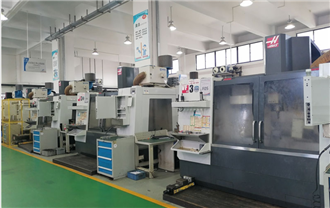
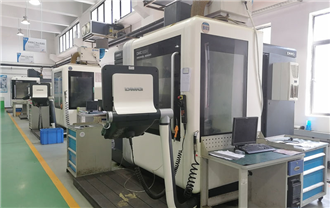
Producing robot joint parts in lightweight alloys requires specialized expertise and equipment. Key manufacturing capabilities include:
● 5-axis CNC machining for complex geometries
● High-speed milling to prevent thermal distortion in magnesium
● Precision turning for actuator shafts and bearing seats
● Surface treatment for corrosion protection
● Quality inspection with CMM and optical measurement systems
According to MatWeb Materials Database, proper alloy selection and heat treatment significantly impact final component performance.
The field continues to evolve with emerging technologies:
| Trend | Impact on Joint Parts |
| Metal matrix composites | Enhanced stiffness and wear resistance |
| Additive manufacturing | Complex internal channels for cooling |
| Nano-structured alloys | Superior strength-to-weight ratios |
| Smart materials | Integrated sensing capabilities |
| Recyclable alloys | Sustainable manufacturing |
Lightweight alloys are fundamental to advancing humanoid robotics. Aluminum and magnesium alloys, combined with intelligent design and precision manufacturing, enable joints that are strong, efficient, and capable of meeting the demanding requirements of human-robot interaction. As the industry progresses, material innovation will continue to drive breakthroughs in robot performance and capability.
Contact us to discuss your manufacturing requirements for robot joint parts in lightweight alloys.
Q1: What is the best aluminum alloy for humanoid robot joints?
A: Aluminum 7075-T6 is preferred for high-stress load-bearing joints due to its superior strength, while 6061-T6 is ideal for structural components requiring excellent machinability and corrosion resistance.
Q2: Can magnesium alloys safely be used in humanoid robots?
A: Yes, with proper alloy selection and surface treatment. AZ91 and AM60 alloys are commonly used, with coatings providing corrosion protection and flame retardant properties.
Q3: How much weight can be saved by using magnesium instead of aluminum?
A: Magnesium is approximately 35% lighter than aluminum, potentially reducing joint component weight by 30-35% depending on design and application requirements.
Q4: What tolerances are achievable for lightweight alloy robot joint parts?
A: Precision CNC machining can achieve tolerances within ±0.01mm for critical dimensions, ensuring proper fit and function in robot joint assemblies.
Q5: What surface treatments are recommended for magnesium robot joints?
A: Common treatments include chromate conversion coating, anodizing, and polymer coatings to enhance corrosion resistance and wear properties.
Add: Building 3No.277 Zhen'an Middle Road, Chang'an Town,Dongguan,Guangdong, China
Tel:+86-769-82855591
Copyright © 2019 All Rights Reserved Dongguan Start Precision Technology Co., Ltd. Tel: +86-769-82855591
Add: No. 277 Zhen'an Middle Road, Chang'an Town, Dongguan, Guangdong, China



 中文版
 English