Five-Axis Precision Machining: Mastering the Art of Complex Thread Components
Date:2026-01-13Article editor:Starting Point PrecisionViews:662The Limitations of Traditional Thread Manufacturing
Traditional thread production, using taps, dies, or simple CNC cycles, is effective for standard, straight threads. Yet, it falls short for advanced applications. Challenges include:
Limited Geometries: Difficulty producing threads on non-orthogonal surfaces, such as tapered, radial, or contoured faces.
Tool Access Issues: Inability to machine threads in deep cavities, near obstructions, or with interrupted cuts.
Weakness & Inconsistency: The inherent axial pressure and potential misalignment in conventional methods exert a detrimental effect on precision and fatigue resistance. This problem is compounded dramatically when working with high-strength, low-machinability materials such as titanium and Inconel.This fundamentally undermines the structural integrity of the joint, especially in challenging materials like titanium or Inconel.
How Five-Axis Machining Redefines Thread Precision
The dynamic capabilities of a five-axis CNC machine address these exact pain points. By enabling continuous, simultaneous control of the cutting tool’s orientation relative to the workpiece, it unlocks new possibilities:
Optimal Tool Orientation: The tool can remain perfectly normal (perpendicular) to the thread’s helical path at every point, even on complex surfaces. This ensures perfect thread form and reduces side-loading on the cutter.
Unrestricted Access: The two rotational axes allow the spindle to approach the workpiece from any angle, making it possible to machine internal threads in deep, confined areas or external threads on large, complex parts in a single setup.
Superior Thread Milling: Five-axis thread milling, using a single-point cutter, produces stronger threads with better surface finish. The process offers greater control over tolerances and allows for the machining of large diameters without specialized tooling. Explore the benefits of our advanced thread manufacturing capabilities.
Single-Setup Production: Complete a complex part with multiple, differently oriented threads in one clamping. This eliminates cumulative errors from re-fixturing and drastically improves positional accuracy between features.
Critical Applications for Precision-Cut Threads
This technological leap is crucial for industries where thread failure is not an option:
Aerospace & Defense: Producing threaded joints that are both exceptionally strong and lightweight is essential for advanced engine parts, landing gear, and structural assemblies in demanding aerospace applications. Materials like titanium alloys demand the precise, low-stress cutting of five-axis machining. Standards from organizations like SAE International govern these critical threads.
Oil & Gas: Creating robust, leak-proof threaded connections for downhole tools, wellhead equipment, and valve bodies that withstand extreme pressures and corrosive environments.
Medical Devices: Producing miniature, biocompatible threads for orthopedic implants (bone screws), surgical instruments, and diagnostic equipment with absolute hygiene and reliability.
High-Performance Automotive: Machining precise port threads for fuel systems, custom fittings for hydraulic circuits, and specialized fasteners for racing components.
The Synergy of Technology and Expertise
Achieving perfect threads via five-axis machining is not automatic; it requires a synthesis of advanced resources:
Advanced CAM Programming: Sophisticated software is essential to generate the complex, synchronized toolpaths that define the thread's helix while managing tool orientation and collision avoidance.
Rigid Machine Tool & Tooling: Maintaining consistent accuracy hinges on two paramount factors: a rigid, high-precision five-axis machine base and dedicated, premium-grade thread milling cutters, which work in concert throughout the entire cutting process.
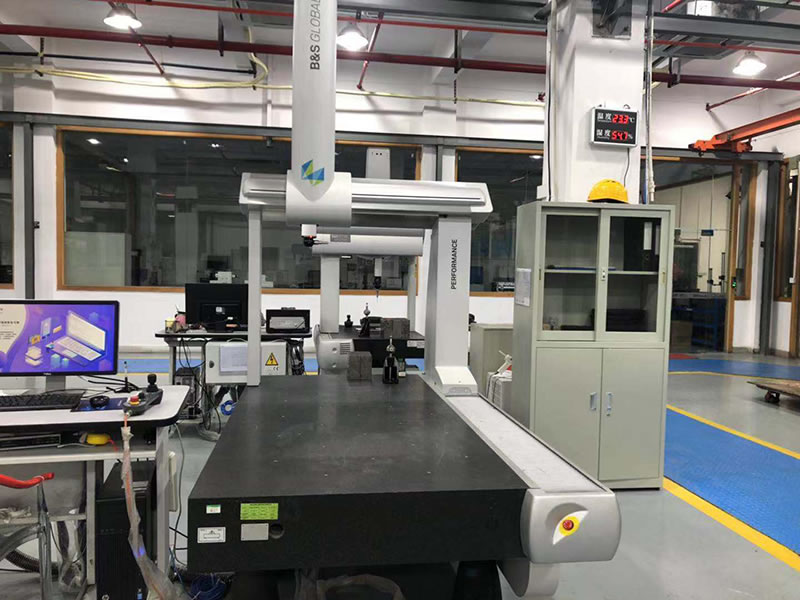
Metrology & Verification: Post-process inspection using coordinate measuring machines (CMMs) or optical comparators is critical to validate thread geometry, pitch diameter, and surface finish against stringent specifications.
Conclusion
Five-axis precision machining has fundamentally transformed the fabrication of critical threaded components. By providing complete control over the cutting tool's path and angle, it enables the creation of stronger, more precise, and geometrically complex threads that are impossible with traditional methods. As engineering designs continue to push boundaries toward lighter, stronger, and more integrated systems, five-axis technology stands as the indispensable method for turning these ambitious designs into reliable, high-performance reality.
Add: Building 3No.277 Zhen'an Middle Road, Chang'an Town,Dongguan,Guangdong, China
Tel:+86-769-82855591
Copyright © 2019 All Rights Reserved Dongguan Start Precision Technology Co., Ltd. Tel: +86-769-82855591
Add: No. 277 Zhen'an Middle Road, Chang'an Town, Dongguan, Guangdong, China



 中文版
中文版 English