Small-Batch Robot Parts CNC Rapid Prototyping
Date:2026-09-21Article editor:Starting Point PrecisionViews:190Small-batch robot parts CNC rapid prototyping is changing how robotics teams move from design files to functional hardware. Instead of waiting weeks for hard tooling, engineers can machine 5 to 50 units in days, validate fit and function, then iterate without massive cost. This approach is especially valuable for robotic arms, grippers, mobile platforms, and custom end-effectors where geometry changes frequently and tolerances matter.

Robotics development is iterative. A joint housing may need three revisions before torque testing passes. A gripper finger may need five versions before grip reliability is acceptable. CNC machining removes the tooling barrier, so each revision is just another program and another setup. This is a core advantage of rapid prototyping for hardware teams.
Key advantages include:
● Speed: Machined parts in 3–7 days, compared with 4–8 weeks for injection molding.
● Material choice: Aluminum 6061, 7075, stainless steel, brass, bronze, and engineering plastics.
● Tolerance control: ±0.01 mm for critical mating features. See GD&T principles for drawing best practices.
● Design freedom: Undercuts, threaded holes, pockets, and thin walls without draft angles.
● Scalability: Same process can produce 1 unit or 500 units before transitioning to casting or molding.
We treat every robot part as a functional component, not just a machined shape. Our workflow is built around speed, repeatability, and communication.
1. DFM review within hours. We check wall thickness, tool access, thread depth, and datum strategy. If a feature will fail in machining, we say so before cutting metal.
2. Material and finish selection. For robot arms, 7075-T6 offers high strength-to-weight ratio. For sensor mounts, 6061-T6 provides good stability. We also offer anodizing, bead blasting, and chromate conversion.
3. Fixturing for repeatability. Small batches fail when setup varies. We design soft jaws and modular fixtures so part #1 and part #20 match.
4. In-process inspection. Critical dimensions are checked with calipers, micrometers, and CMM when needed. We document results so you can trace every batch.
5. Fast turnaround without cutting corners. Our scheduling prioritizes prototype lots, but we never skip deburring, cleaning, or final inspection.
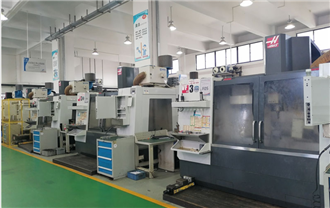
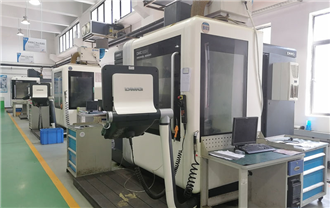
For teams that need a manufacturing partner who understands robot dynamics, Start Precision provides CNC machining for robotics with a focus on small-batch rapid prototyping.
| Process | Typical Lead Time | Setup Cost | Best Batch Size |
| CNC machining | 3–7 days | Low | 1–500 |
| 3D printing | 1–3 days | Very low | 1–50 |
| Injection molding | 4–8 weeks | High | 1,000+ |
| Die casting | 6–10 weeks | High | 2,000+ |
● Joint housings and actuator mounts
● Gripper jaws and finger linkages
● Sensor brackets and camera mounts
● Base plates and structural frames
● Gearbox adapters and shaft couplers
● Custom end-effector plates
Industry coverage from The Robot Report shows how quickly robotics hardware continues to evolve.
● Use standard drill and tap sizes.
● Avoid deep pockets narrower than 4× tool diameter.
● Specify critical dimensions only; too many tight tolerances increase cost.
● Add chamfers or fillets to reduce stress concentration.
● Include a datum surface for fixturing.
Small-batch robot parts CNC rapid prototyping gives robotics teams a practical path from CAD to tested hardware. By focusing on DFM, fixturing, and inspection, you get parts that fit, function, and scale. If you are developing robotic systems and need reliable machined components, contact us to discuss your manufacturing needs.
1. What is the minimum order quantity for CNC rapid prototyping?
We can machine as few as one part. Most small-batch robot projects order 5–50 units.
2. How fast can you deliver small-batch robot parts?
Typical lead time is 3–7 business days after design approval, depending on complexity and finishing.
3. What materials are best for robot parts?
Aluminum 7075-T6 for high-strength arms, 6061-T6 for general structures, stainless steel for wear surfaces, and engineering plastics for lightweight covers.
4. Can you match tight tolerances across a small batch?
Yes. With dedicated fixtures and in-process inspection, we maintain ±0.005–0.01 mm on critical features.
5. Do you provide finishing services?
Yes. Anodizing, bead blasting, chromate conversion, and laser marking are available.
6. How do I send my design files?
Upload STEP, IGES, or native CAD files. We review and quote within hours.
Add: Building 3No.277 Zhen'an Middle Road, Chang'an Town,Dongguan,Guangdong, China
Tel:+86-769-82855591
Copyright © 2019 All Rights Reserved Dongguan Start Precision Technology Co., Ltd. Tel: +86-769-82855591
Add: No. 277 Zhen'an Middle Road, Chang'an Town, Dongguan, Guangdong, China



 中文版
 English