Turning and Grinding: A Synergistic Approach to Precision Manufacturing
Date:2026-01-06Article editor:Starting Point PrecisionViews:606In the realm of precision manufacturing, two fundamental processes stand as pillars for creating high-tolerance components: turning and grinding. While distinct in their methods, their strategic combination unlocks unparalleled levels of accuracy, surface finish, and efficiency. This article delves into each process and explores the powerful synergy created when they are integrated into modern production workflows.
Understanding the Core Processes
Turning is a machining operation where a single-point cutting tool removes material from a rotating workpiece. Primarily performed on lathes or turning centers, it is the go-to method for producing cylindrical, conical, or contoured parts. Turning excels at rapid material removal, shaping the general geometry of components such as shafts, bushings, and flanges with high efficiency. Modern CNC turning centers offer exceptional capabilities for complex profiles. For a deeper
look into advanced turning services, visit our company dedicated CNC turning page.
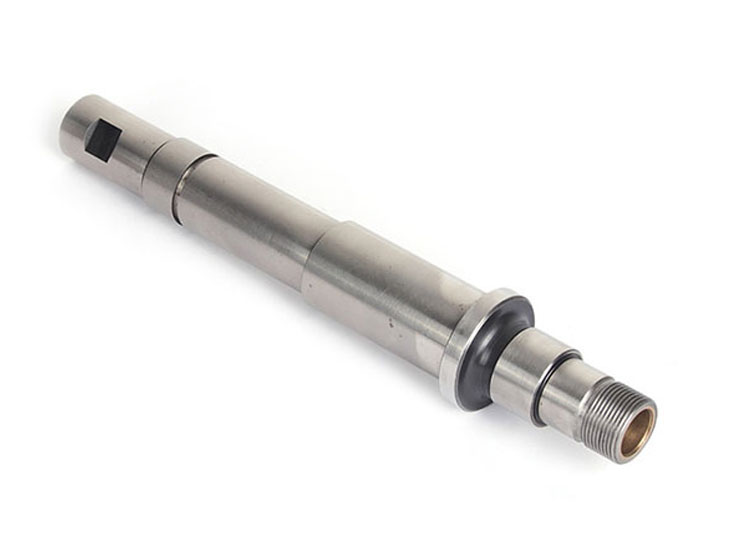
Image: A CNC lathe performing precision turning operations.
Grinding, in contrast, is an abrasive machining process. It employs a rotating grinding wheel composed of abrasive grains to remove minute amounts of material. This process is characterized by its ability to achieve extremely tight dimensional tolerances, exceptional geometric accuracy (like roundness or flatness), and superior surface finishes. Grinding is often the final machining step, crucial for parts where surface integrity and precise fit are paramount, such as bearing races, tooling, and hydraulic components. Learn about industry grinding standards at the [external link: https://www.startprecision.com/] .
The Powerful Synergy: When Turning Meets Grinding
While turning establishes the part's basic form, grinding perfects it. The true power in modern manufacturing lies in combining these processes, either sequentially in a coordinated production line or within a single, advanced machine tool.
Sequential Combination: This is the traditional approach. A workpiece is first roughed and semi-finished on a turning center to achieve near-net shape efficiently. It is then transferred to a grinding machine for the final finishing operations. This method is widespread and highly effective but involves multiple setups and material handling.
Integrated "Turn-Grind" Machines: Technological advancements have led to the development of multi-tasking machines (MTMs) and 5-axis machining centers that can perform both turning and grinding in a single setup. A component is chucked once, and the machine uses interchangeable tools or integrated spindles to perform turning operations followed immediately by grinding. This approach eliminates cumulative errors from re-clamping, drastically reduces cycle times, and ensures perfect alignment between the features created by each process. Discover our capabilities in this area on our [internal link: /technology/multi-tasking-machines] multi-tasking machining page.
Key Applications and Industries
The turning-grinding combination is critical in industries where failure is not an option:
Aerospace: For high-strength, heat-resistant turbine shafts and landing gear components that require both robust geometry and flawless surfaces.
Automotive: In the production of fuel injection systems, transmission shafts, and engine valves where precision dictates performance and longevity.
Medical: For surgical implants and instruments that must have biocompatible surfaces and exacting dimensions.
Mold & Die: Creating intricate cores and cavities with mirror-like finishes.
Conclusion: The Future of Precision
Turning and grinding are not competing processes; they are complementary forces in the quest for manufacturing excellence. The trend is clearly moving towards greater integration, driven by intelligent machine tools and sophisticated CAM programming. By leveraging the strengths of both—turning for efficient shaping and grinding for ultimate precision—manufacturers can achieve new levels of quality, reduce total production time, and innovate in the design of next-generation components. To stay updated on the latest in hybrid machining, follow research from [external link: https://www.startprecision.com/stamping-die-template] ASME's manufacturing resources.
Embracing this synergistic approach is essential for any operation aiming to lead in the competitive field of high-precision manufacturing.
Add: Building 3No.277 Zhen'an Middle Road, Chang'an Town,Dongguan,Guangdong, China
Tel:+86-769-82855591
Copyright © 2019 All Rights Reserved Dongguan Start Precision Technology Co., Ltd. Tel: +86-769-82855591
Add: No. 277 Zhen'an Middle Road, Chang'an Town, Dongguan, Guangdong, China



 中文版
中文版 English