CNC Machining Parts: Achieving Seamless Integration with Assembly Lines
Date:2026-01-21Article editor:Starting Point PrecisionViews:702In modern manufacturing, efficiency is determined not just by how fast a part is made, but by how smoothly it transitions from the machine tool to the final product. The true potential of CNC machining parts is unlocked when they are designed and produced for seamless assembly line integration. This synergy minimizes bottlenecks, reduces handling, and accelerates time-to-market.
The Integration Imperative
Modern assembly lines, especially in automotive, aerospace, and consumer electronics, are high-speed, automated ecosystems. A manually handled, inconsistently sized, or poorly documented part can disrupt the entire flow. Therefore, CNC machining must evolve from an isolated "job shop" process to a connected, data-driven component of the production chain.
Key Strategies for Seamless Integration
1. Design for Assembly (DFA) from the Start
Integration begins at the CAD stage. CNC programmers and design engineers must collaborate to apply Design for Assembly (DFA) principles. This includes:
Standardizing Features: Using common hole sizes, fastener types, and alignment features across multiple parts to simplify robotic grasping and assembly.
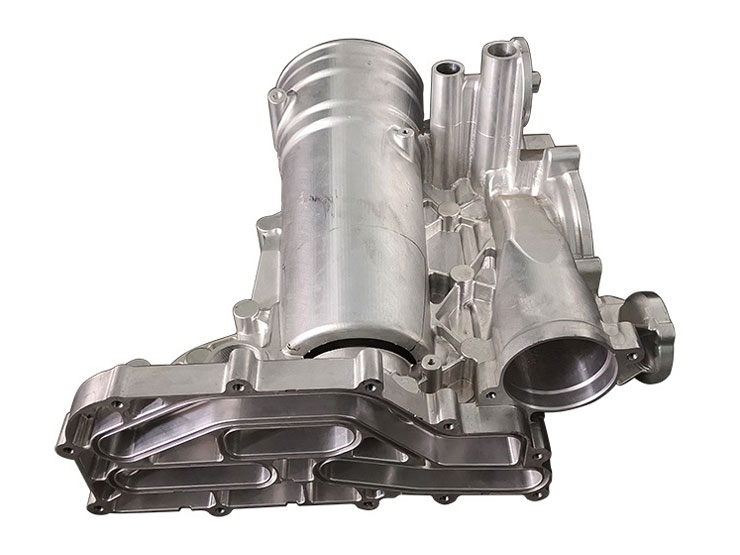
Incorporating Datums and Fixturing Points: Designing in precise, machined locating surfaces that align with automated fixtures on the assembly line, as shown in this CNC part with integrated fixturing features :
2. Precision and Consistency as a Foundation
The inherent accuracy of CNC machining is its greatest asset for integration. Holding tight geometric tolerances and superior surface finishes ensures that every part fits perfectly without manual adjustment or force. This reliability is the bedrock of automated assembly .
3. Post-Process Automation and Handling
Direct integration often involves automating the part's exit from the CNC machine:
Robotic Unloading: Using 6-axis robots to remove finished parts from the CNC vise or pallet and place them directly onto conveyors or Automated Guided Vehicles (AGVs).
In-Line Secondary Operations: Integrating deburring, washing, or laser marking stations within the CNC cell or immediately after it, so parts arrive "assembly-ready."
4. Smart Data and Traceability
Each machined part can carry digital data critical for the assembly line:
QR Codes/UPC Direct Part Marking (DPM): Machined or laser-etched codes that allow scanners on the line to identify the part and pull up its assembly instructions.
Quality Data Integration: SPC (Statistical Process Control) data from the CNC machine's inspection probes can be logged and linked to the part's serial number, providing full traceability, a requirement in industries like medical device manufacturing .
The Role of Standardized Communication
Seamless integration relies on software interoperability. Modern CAM software generates toolpaths that not only machine the part but also output metadata in formats usable by Manufacturing Execution Systems (MES) and Enterprise Resource Planning (ERP) systems. This creates a closed-loop digital thread from order to assembly.
Benefits of a Fully Integrated Approach
Dramatically Reduced Work-in-Progress (WIP): Parts flow directly to assembly without queueing.
Elimination of Handling Damage: Automated transfer minimizes human contact and potential for scratches or dents.
Faster Error Detection: Any deviation from spec is caught immediately at the machining stage, preventing defective parts from entering the assembly process.
Increased Overall Equipment Effectiveness (OEE): Synchronization maximizes uptime for both CNC machines and assembly stations.
Conclusion
CNC machining is no longer an endpoint. By embracing DFA, leveraging automation for material handling, and embedding smart data into every component, CNC machined parts become perfect citizens of the automated assembly line. This seamless integration is a competitive necessity, driving the agility, quality, and efficiency demanded by Industry 4.0 manufacturing. To learn how our machining processes are designed for integration, review our capabilities for high-volume production .
Add: Building 3No.277 Zhen'an Middle Road, Chang'an Town,Dongguan,Guangdong, China
Tel:+86-769-82855591
Copyright © 2019 All Rights Reserved Dongguan Start Precision Technology Co., Ltd. Tel: +86-769-82855591
Add: No. 277 Zhen'an Middle Road, Chang'an Town, Dongguan, Guangdong, China



 中文版
中文版 English