Consistent CNC Machining Parts: The Backbone of Reliable Manufacturing
Date:2026-01-23Article editor:Starting Point PrecisionViews:716In modern industrial production, consistency is not merely a goal—it is a strict requirement. For assembly lines, medical device manufacturers, and aerospace suppliers, part variation is the enemy of efficiency, safety, and cost control. Producing uniform CNC machining parts across hundreds or thousands of units is a complex engineering discipline that ensures every component, from the first to the last in a batch, meets identical specifications.
The High Cost of Inconsistency
Variation in part dimensions, surface finish, or material properties can lead to assembly failures, product malfunctions, and costly recalls. Industries like automotive and aerospace operate on razor-thin tolerances, where even a micron of deviation can compromise an entire system. Achieving batch-to-batch consistency is what separates a proficient machine shop from a world-class manufacturing partner.
Pillars of Batch-to-Batch Consistency
1. Machine Tool Stability & Process Control
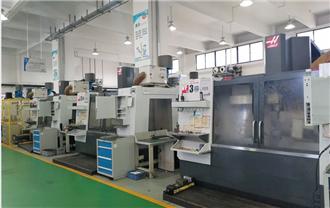
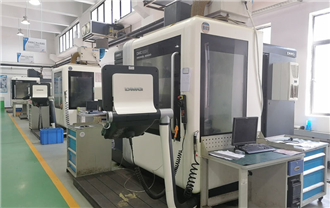
The foundation of consistency lies in the CNC equipment itself. High-precision machines with rigid frames, thermal stability compensation, and precision ball screws ensure repeatable movement. Critical to this is Advanced Process Control (APC), which involves:
Qualified Setup Procedures: Using precision tool setters and probe systems to establish accurate workpiece zero points and tool lengths for every batch.
Optimized, Fixed Toolpaths: Once a proven CNC program is developed, it is locked down. Any changes undergo rigorous validation to prevent unintended variation.
2. Rigorous Quality Assurance Systems
Consistency is verified, not assumed. A robust QA system is non-negotiable:
First-Article Inspection (FAI): A comprehensive dimensional and material report on the initial parts, often against the original CAD model.
Statistical Process Control (SPC): Real-time monitoring of critical dimensions during a production run using calibrated measuring tools like CMMs (Coordinate Measuring Machines). This data predicts trends and prevents drift out of tolerance.
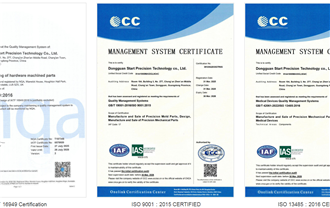
Standardized Inspection Protocols: Clear instructions for in-process and final inspection, often aligned with international standards like ASME or ISO 9001/AS9100.
3. Material & Supply Chain Management
Uniform parts start with uniform raw materials. Reputable manufacturers:
Source materials from certified suppliers with full traceability (mill certificates).
Implement strict storage and handling procedures to prevent material corruption or mix-ups.
Understand how different material lots may machine slightly differently and adjust parameters accordingly, a key aspect for maintaining consistency in high-strength alloys.
Applications Demanding Absolute Uniformity
Medical Device Manufacturing: Surgical instruments, implantable components, and diagnostic equipment require absolute conformity to ensure patient safety and regulatory compliance (e.g., FDA 21 CFR Part 820).
Automotive & Electric Vehicles: Powertrain components, sensor housings, and battery module parts must be interchangeable across global assembly lines.
Electronics & Telecommunications: Connectors, heat sinks, and waveguide components require precise, consistent geometry for signal integrity and thermal performance.
Aerospace: Consistent parts are vital for airworthiness. This builds directly on the capability to produce complex, coordinated-motion parts with repeatable precision.
The Role of Digitalization & Smart Manufacturing
The future of consistency is digital. Digital Thread technology creates a seamless flow of data from design (CAD) to planning (CAM) to machining (CNC) to inspection (CMM). Machine Monitoring systems track tool wear, spindle load, and cycle times in real-time, allowing for predictive maintenance and parameter adjustments before consistency is affected.
Conclusion
Consistent CNC machining is the result of a holistic system integrating stable technology, disciplined processes, and meticulous verification. It transforms a digital design into a physical reality—hundreds or thousands of times over, without deviation. For OEMs seeking reliable supply chains and flawless product performance, partnering with a manufacturer that masters this discipline is a critical strategic decision.
Add: Building 3No.277 Zhen'an Middle Road, Chang'an Town,Dongguan,Guangdong, China
Tel:+86-769-82855591
Copyright © 2019 All Rights Reserved Dongguan Start Precision Technology Co., Ltd. Tel: +86-769-82855591
Add: No. 277 Zhen'an Middle Road, Chang'an Town, Dongguan, Guangdong, China



 中文版
中文版 English