CNC vs Manual Machining Parts: Which Fits Your Production Needs?
Date:2026-01-28Article editor:Starting Point PrecisionViews:548Choosing the right manufacturing process is a critical decision that impacts your product's quality, timeline, and budget. The debate between CNC (Computer Numerical Control) and manual machining is central to this choice. While both remove material from a workpiece to create a part, their methodologies, capabilities, and ideal applications differ vastly.
Understanding the Core Differences
Manual Machining relies on the skill of a machinist who directly controls tools using handwheels and levers on equipment like lathes, mills, and drills. The process is dynamic, with decisions made in real-time by the operator.
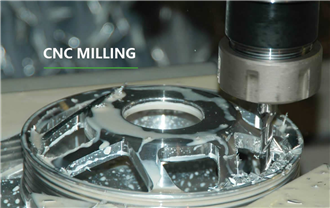
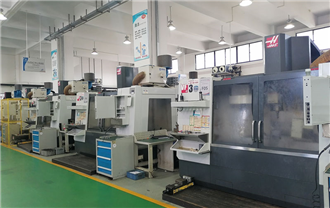
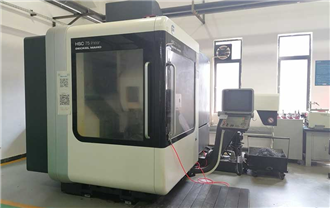
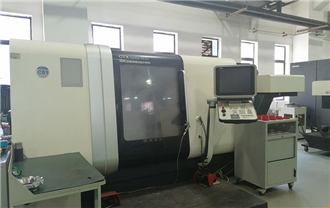
CNC Machining is automated. A machinist programs toolpaths into software, and the CNC machine then executes these instructions with minimal human intervention, controlling tools across multiple axes with precision.
Key Factors for Your Decision
1. Precision, Complexity, and Consistency
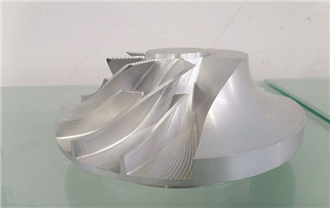
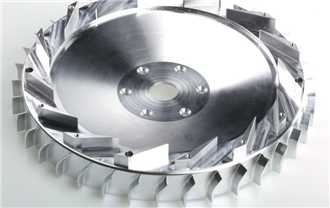
CNC Machining: Excels here. It produces parts with extreme accuracy and repeatability, holding tolerances within +/-0.001 inches or tighter. It can create complex 3D geometries, intricate contours, and perfect circles that are virtually impossible manually. Once programmed, every part in a batch is identical. This is essential for aerospace, medical, and automotive components. Learn about our high-precision CNC Machining Services.
Manual Machining: Precision depends heavily on the operator's expertise. While skilled machinists can achieve great accuracy on simpler geometries, consistency across multiple parts is challenging. It is better suited for basic shapes, modifications, or one-off parts where ultra-tight tolerances are not critical.
2. Production Volume and Lead Time
CNC: Ideal for medium to high-volume production. The initial setup (programming and fixture preparation) takes time and cost. However, once set up, producing additional units is fast and efficient. The lead time is predictable and automation allows for unattended operation.
Manual: Best for prototyping, one-offs, or very low-volume runs. Setup is typically quicker and cheaper for a single part. There's no programming overhead; a machinist can start work directly from a drawing. For more than a few identical parts, however, it becomes slower and less economical than CNC.
3. Cost Considerations
CNC: Higher upfront costs due to programming, setup, and the use of expensive machinery. This investment is amortized over the production run, making the cost per part low for larger batches.
Manual: Lower upfront cost for a single piece, as it avoids programming fees. Labor is the primary cost driver. For small quantities, it is often more cost-effective. For larger runs, the cost per part remains high due to slower speeds and manual labor.
4. Flexibility and Skill Dependency
Manual Machining: Highly flexible for quick adjustments, repairs, or design changes on the fly. It is the domain of highly experienced machinists whose trade knowledge is irreplaceable. Resources like the Society of Manufacturing Engineers highlight the value of these skills.
CNC: Flexibility lies in digital design changes. Altering a part requires updating the CAD model and CNC program, which can be done offline without stopping production. It requires skilled CNC programmers and operators, but less direct manual dexterity during production.
So, Which Process is Right for You?
Choose Manual Machining if:
You need 1-10 simple parts urgently.
Your budget for initial setup is very low.
The part is a basic shape or requires a custom repair/modification.
Tolerances are not extremely tight.
Choose CNC Machining if:
You need high precision and complex geometries.
Your production volume is from tens to thousands of parts.
Consistency across every unit is non-negotiable.
You have modern 3D CAD models available.
The total cost of production (not just per-part) and speed are priorities.
In many modern shops, both processes coexist. A prototype might be made manually for verification before launching full CNC production. The best choice depends on a clear analysis of your part's complexity, required quality, quantity, and budget. Consulting with an experienced machining partner is the best way to navigate this decision. Explore our Capabilities page to see how we leverage both methods to meet client needs.
Add: Building 3No.277 Zhen'an Middle Road, Chang'an Town,Dongguan,Guangdong, China
Tel:+86-769-82855591
Copyright © 2019 All Rights Reserved Dongguan Start Precision Technology Co., Ltd. Tel: +86-769-82855591
Add: No. 277 Zhen'an Middle Road, Chang'an Town, Dongguan, Guangdong, China



 中文版
中文版 English