Robotic Parts Manufacturer with Rapid Prototyping
Date:2026-10-15Article editor:Starting Point PrecisionViews:120A Robotic Parts Manufacturer with rapid prototyping bridges the gap between a robot’s CAD concept and a motion-ready machine. Whether you are developing a humanoid, a collaborative arm, or a custom end-effector, fast iteration on joints, links, brackets, and housings reduces risk before tooling investment.

Why Rapid Prototyping Matters in Robotics
Robotic systems combine tight tolerances, lightweight structures, and complex geometry. A single redesign can affect payload, stiffness, cable routing, and thermal behavior. Rapid prototyping lets engineers test fit, function, and assembly early.
● Faster design validation: Verify kinematics, mounting interfaces, and sensor placement.
● Lower tooling risk: Catch errors before expensive molds or fixtures are cut.
● Better material decisions: Compare aluminum, stainless steel, titanium, and engineering plastics.
● Smooth transition: Use prototype feedback to refine production drawings.
Core Rapid Prototyping Routes
| Method | Best for | Typical lead time* | Key advantage |
| CNC machining | Functional metal/plastic joints, brackets, housings | 3–7 days | Tight tolerances, real material properties |
| SLA/DLP | Fine features, fit checks, visual models | 1–3 days | Smooth surfaces, high detail |
| FDM/FFF | Large frames, jigs, non-critical covers | 1–4 days | Low cost, fast iteration |
| Urethane casting | Small batches after master pattern | 5–10 days | Bridge to low-volume production |
*Lead times vary by geometry, material, and finishing.
Materials, Tolerances, and Finishing
A capable partner should guide material selection based on load, wear, weight, and environment.
● Metals: aluminum 6061/7075, stainless steel, titanium, copper alloys
● Plastics: POM, PEEK, ABS, PC, nylon
● Tolerances: high-precision CNC processes can target tolerances within ±0.01 mm for qualified features
● Finishing: anodizing, bead blasting, polishing, heat treatment, assembly
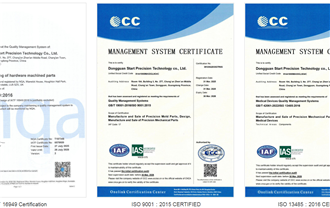
Quality systems often follow frameworks such as ISO 9001. Industry resources from A3 and the IEEE Robotics and Automation Society also help teams stay current with robotics design and automation standards.
From Prototype to Production
1. Review the CAD and DFM: Check wall thickness, tolerances, tool access, and assembly.
2. Choose the process: CNC machining for functional parts; 3D printing for early form/fit.
3. Machine and inspect: Confirm critical dimensions before assembly.
4. Test and iterate: Refine the design based on motion, load, and wear results.
5. Scale to production: Move to repeatable CNC manufacturing or low-volume casting.
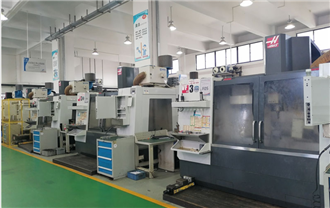
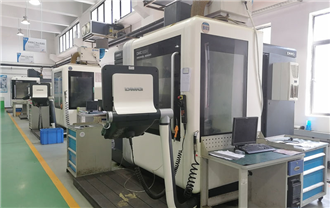
For custom precision manufacturing, review Start Precision and its precision equipment capabilities, which include CNC milling, CNC turning, surface and cylindrical grinding, wire cutting, EDM, and five-axis machining. These processes support robotic parts such as joint housings, end-effector plates, gearbox mounts, and lightweight structural frames.
What to Look for in a Manufacturing Partner
● Engineering feedback before machining
● Documented inspection and material traceability
● Experience with tight-tolerance robotic components
● Clear communication on lead time and cost
● A practical path from one prototype to repeat orders
Contact us to discuss your manufacturing needs.
FAQs
1. What is rapid prototyping in robotic parts manufacturing?
It is the fast production of functional or visual parts—often by CNC machining or 3D printing—to test fit, form, and function before mass production.
2. Which materials are best for robot joints and brackets?
Aluminum and stainless steel are common for strength and corrosion resistance; PEEK, POM, and nylon are useful for lightweight, low-friction, or insulating parts.
3. How tight can tolerances be?
Depending on feature, material, and process, qualified CNC operations can reach tolerances within ±0.01mm.
4. Can prototype parts move to production?
Yes. A good manufacturer can use prototype feedback to create stable CNC programs, fixtures, and inspection plans for repeat production.
5. How do I choose a Robotic Parts Manufacturer?
Look for DFM support, precision equipment, inspection discipline, and experience in robotics or similar high-precision industries.
Add: Building 3No.277 Zhen'an Middle Road, Chang'an Town,Dongguan,Guangdong, China
Tel:+86-769-82855591
Copyright © 2019 All Rights Reserved Dongguan Start Precision Technology Co., Ltd. Tel: +86-769-82855591
Add: No. 277 Zhen'an Middle Road, Chang'an Town, Dongguan, Guangdong, China



 中文版
 English