Metalworking Industry CNC Machining Parts: The Precision of Cutting Tools & Forming Dies
Date:2026-01-17Article editor:Starting Point PrecisionViews:629The metalworking industry is fundamentally built on transformation—shaping raw metal into functional components. At the heart of this transformative process lie two critical categories of CNC machining parts: cutting tools and forming dies. These are not merely products of machining; they are the master tools that enable all other production. Precision-machined using advanced CNC technology, they define the efficiency, quality, and capabilities of modern manufacturing.
The Creators: CNC-Machined Cutting Tools
Cutting tools are the direct actuators of material removal. CNC machining, particularly on 5-axis machining centers, is essential for producing these tools with the complex geometries required for high performance.
End Mills & Drills: It is the precision of CNC grinding and milling that creates cutting edges for every design, from simple flutes to advanced coolant-through geometries, ensuring optimal surface finish and maximizing tool life. A close-up of a CNC machine finishing the flutes on a solid carbide end mill.
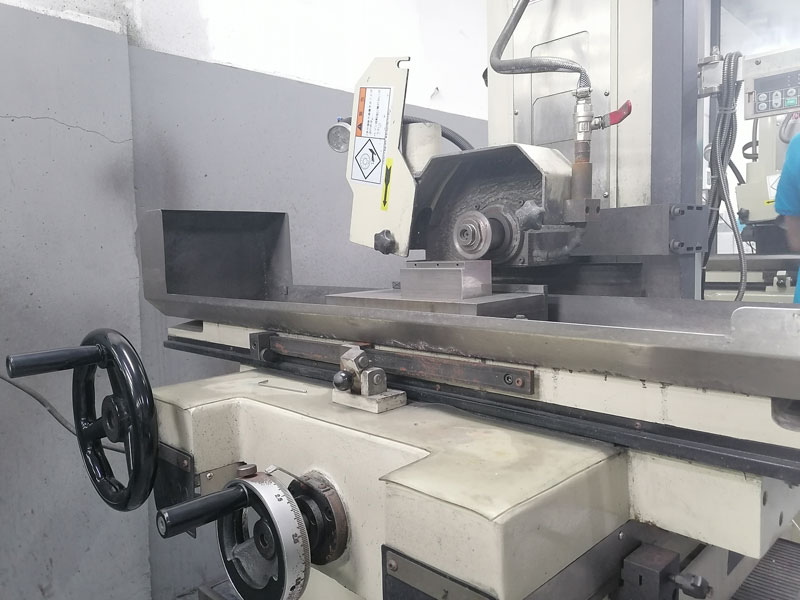
Inserts & Tool Holders:The micron-level precision of machined insert pockets dictates the seating security and positional repeatability of the tool. This essential consistency, enabled by CNC machining, is vital for achieving stability in milling, turning, and boring processes. Learn more about our precision CNC turning capabilities for tool holders .
Specialized Tooling: Industries like aerospace demand custom form tools and profile cutters, which are exclusively produced via CNC machining, allowing for the creation of unique contours.
The production of these tools relies on ultra-hard materials like carbide, ceramics, and CBN, making CNC machining the only viable method for their precise fabrication. Leaders in tooling technology, such as Sandvik Coromant and OSG ,depend on high-precision CNC processes to manufacture their products.
The Shapers: CNC-Machined Forming Dies
Forming dies, used in stamping, forging, and molding, create parts through deformation rather than cutting. They are the negative molds that define a part's final shape under immense pressure.
Stamp Dies: These dies, often made from hardened tool steel like D2 or H13, feature intricate cavities and precise punch profiles. CNC milling, EDM (Electrical Discharge Machining), and deep-hole drilling are used to create these complex forms with tight tolerances.
Forging Dies: Designed to withstand extreme shock and heat, forging dies are machined from tough alloys. Their cavities are CNC-machined to net shape, ensuring the forged component requires minimal secondary machining.
Injection Molds: While for plastic, the metal molds are masterpieces of CNC work. They require flawless surface finishes, complex cooling channels, and precise core/cavity alignment—all achieved through sophisticated CNC machining strategies.
Key Factors in Machining These Critical Parts
Producing reliable cutting tools and forming dies demands specific CNC considerations:
Material Expertise: Machining hard tool steels and carbides requires specific speeds, feeds, and often specialized toolpaths to manage heat and stress.
Ultra-Precision: Tolerances are frequently within microns. Machine rigidity, thermal stability, and precision measuring are paramount.
Surface Finish Integrity: The surface quality of a die directly transfers to the finished part. CNC processes are followed by polishing and often advanced coatings like TiN or CrN for wear resistance.
Advanced Processes: CNC is often complemented by EDM for sharp corners and deep cavities, and deep-hole drilling for conformal cooling channels in molds and dies.
Driving Forces Across Industries
The quality of these CNC-machined master tools cascades down through entire supply chains:
Automotive: High-speed stamping dies for body panels and engine forging dies.
Aerospace: Precision milling tools for aluminum and titanium, and dies for structural components.
Consumer Goods: Molds and dies for appliances, electronics, and hardware.
Conclusion
In the metalworking ecosystem, CNC machining parts for cutting tools and forming dies represent the foundational layer of innovation. By investing in the precision of these master components, industries gain the capability to produce everything else with greater speed, accuracy, and efficiency. They are the unsung heroes, engineered by CNC, that shape our manufactured world.
Need custom, precision-machined tooling or die components? Contact our engineering team for a specialized consultation .
Add: Building 3No.277 Zhen'an Middle Road, Chang'an Town,Dongguan,Guangdong, China
Tel:+86-769-82855591
Copyright © 2019 All Rights Reserved Dongguan Start Precision Technology Co., Ltd. Tel: +86-769-82855591
Add: No. 277 Zhen'an Middle Road, Chang'an Town, Dongguan, Guangdong, China



 中文版
中文版 English