CNC Lathe Parts Manufacturer | Precision Special-Shaped and Complex Rotary Components Machining
Date:2026-03-28Article editor:Starting Point PrecisionViews:530In the world of precision manufacturing, not all components conform to simple cylindrical geometries. Engineers and designers frequently push the boundaries of innovation, creating parts with non-circular profiles, eccentric features, and intricate multi-axis geometries. These special-shaped and complex rotary components represent the pinnacle of machining complexity. As a specialized CNC lathe parts manufacturer, mastering the production of such demanding parts requires advanced equipment, technical expertise, and an unwavering commitment to precision.
Defining Special-Shaped and Complex Rotary Components
Special-shaped components are those that deviate from standard geometric forms such as perfect cylinders, disks, or simple sleeves. They may feature asymmetrical profiles, off-center bores, polygonal cross-sections, or curved surfaces that cannot be produced through conventional turning alone. Complex rotary components combine rotational symmetry with intricate features such as cam profiles, eccentric diameters, threads at varying angles, or internal contours that require specialized tooling.
The demand for precision special-shaped and complex rotary components machining has grown significantly across industries where innovation demands form follows function. From automotive camshafts with complex lobe profiles to medical implant components with patient-specific geometries, these parts require manufacturing solutions that go beyond traditional capabilities.
The Technology Behind Complex Rotary Machining
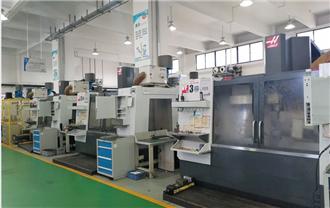
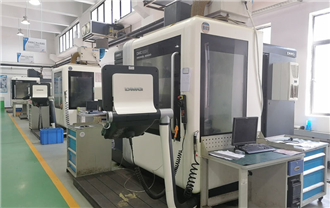
Producing special-shaped and complex rotary components requires more than a standard CNC lathe. Modern manufacturing relies on multi-axis turning centers and mill-turn machines that combine the capabilities of a lathe with those of a machining center. These advanced platforms integrate:
Live Tooling: Driven tools that rotate independently, enabling milling, drilling, and tapping operations without removing the workpiece from the machine.
C-Axis Capability: The ability to position the spindle at precise angular increments, allowing for milling of flats, slots, and holes at specific orientations.
Y-Axis Functionality: Vertical tool movement that enables off-center milling and complex contouring.
Sub-Spindle (Second Spindle): Allows for part transfer and complete machining of complex components in a single setup, eliminating secondary operations and ensuring perfect alignment.
These capabilities enable a skilled CNC lathe parts manufacturer to transform raw material into finished complex components with minimal handling and maximum accuracy.
Common Types of Special-Shaped and Complex Rotary Components
The variety of non-standard components produced through advanced turning encompasses numerous categories:
Eccentric Shafts: Shafts with multiple axes of rotation, commonly used in pump mechanisms, automotive steering systems, and textile machinery.
Cams and Camshafts: Components with non-circular profiles that convert rotational motion into linear motion, critical in engines and automated equipment.
Polygonal Profiles: Square, hexagon, or octagonal sections machined on cylindrical blanks for wrenching surfaces or drive connections.
Curved and Sculpted Surfaces: Components with complex contours that blend multiple radii and angles, often found in fluid handling and aerospace applications.
Swiss-Type Precision Components: Miniature, complex parts with intricate features produced on Swiss-style automatic lathes for medical and electronics industries.
Applications Across Demanding Industries
Precision special-shaped and complex rotary components machining serves industries where innovation and performance intersect:
Automotive: Eccentric shafts for variable valve timing, cam profiles for fuel injection systems, and complex transmission components with integrated gear features.
Medical: Orthopedic implants with patient-specific geometries, surgical instrument handles with ergonomic contours, and dental components requiring exceptional surface finishes.
Aerospace: Hydraulic actuator components with integrated ports, fuel system fittings with complex internal geometries, and structural components combining turning and milling features.
Defense: Fire control mechanisms, precision optics housings, and ordnance components requiring exacting specifications.
Industrial Automation: Custom cams for packaging machinery, eccentric rollers for material handling, and specialized fasteners for robotic systems.
When developing special-shaped components, early collaboration between design engineers and machining experts is essential.
Quality Control for Complex Geometries
Manufacturing special-shaped and complex rotary components demands rigorous quality assurance. Traditional inspection methods often prove insufficient for non-standard geometries. Advanced manufacturers employ:
Coordinate Measuring Machines (CMM): Capable of measuring complex profiles and verifying dimensional accuracy across multiple axes.
Optical and Laser Scanning: For verifying intricate contours and surface geometries that cannot be captured with contact probes.
In-Process Probing: Real-time verification of critical features during machining, reducing scrap and ensuring first-article accuracy.
Material Considerations for Complex Components
The choice of material significantly impacts the machinability of special-shaped components. Hardened steels require specialized tooling and strategies. Titanium demands careful speed and feed management. Exotic alloys such as Inconel and Monel present challenges that only experienced CNC lathe parts manufacturers can consistently overcome. Material selection must balance design requirements with manufacturing feasibility to achieve optimal results.
Conclusion
The ability to produce special-shaped and complex rotary components distinguishes exceptional manufacturers from the ordinary. As a dedicated CNC lathe parts manufacturer specializing in precision special-shaped and complex rotary components machining, we combine advanced multi-axis technology, decades of machining expertise, and rigorous quality control to transform challenging designs into reality. When your project demands geometries that defy convention, precision is not just a requirement—it is the foundation of success.
Please contact our engineering team today to discuss how our advanced machining capabilities can bring your most complex rotary component designs to life.
Add: Building 3No.277 Zhen'an Middle Road, Chang'an Town,Dongguan,Guangdong, China
Tel:+86-769-82855591
Copyright © 2019 All Rights Reserved Dongguan Start Precision Technology Co., Ltd. Tel: +86-769-82855591
Add: No. 277 Zhen'an Middle Road, Chang'an Town, Dongguan, Guangdong, China



 中文版
中文版 English