Custom CNC Machining for Exact Component Replication
Date:2026-06-26Article editor:Starting Point PrecisionViews:427When a critical machine breaks down or a legacy product needs renewal, sourcing an identical replacement part often becomes a nightmare. Original drawings may be lost, suppliers may have ceased production, or minimum order quantities may be prohibitive. This is where custom CNC machining parts for copying existing components bridges the gap—delivering physical duplicates that match the original in form, fit, and function, often with improved material or finish options.
Replicating an existing component is not as simple as “scan and cut.” Wear, corrosion, and manufacturing tolerances from the original production run must be accounted for. A skilled CNC shop uses a combination of precision measuring tools, 3D scanning, and coordinate measuring machines (CMM) to capture every critical dimension. For example, a hydraulic valve spool from a 1980s press may have worn lands; our team measures unworn sections and extrapolates the original geometry, then compensates for clearance fits. This reverse-engineering process ensures the new part performs better than a worn original while maintaining interchangeability.
CNC (computer numerical control) offers unmatched repeatability and geometric accuracy. Unlike manual machining, CNC can reproduce complex curves, threads, and bores within ±0.005 mm. For replicated parts, this means:
● Consistent quality across multiple copies.
● Material flexibility – from aluminum and stainless steel to engineering plastics and exotic alloys like Inconel.
● Rapid prototyping – a single test piece can be verified before full production.
Our proven process for copying existing parts consists of four steps:
1. Digitisation – Using a blue-light scanner (accuracy 0.02 mm) and tactile probing to capture both external and internal features. We also measure critical bores and keyways with calibrated gauges.
2. CAD Reconstruction – The point-cloud data is converted into a solid model. Our engineers add tolerances based on fit class (e.g., H7/g6 for sliding fits). We often reference ASME Y14.5 standards, and you can learn more about these tolerances at GD&T guide .
3. CAM Programming – We use Mastercam and Fusion 360 to create multi-axis toolpaths. Simulations verify that tool collisions are avoided, especially for deep cavities or undercuts.
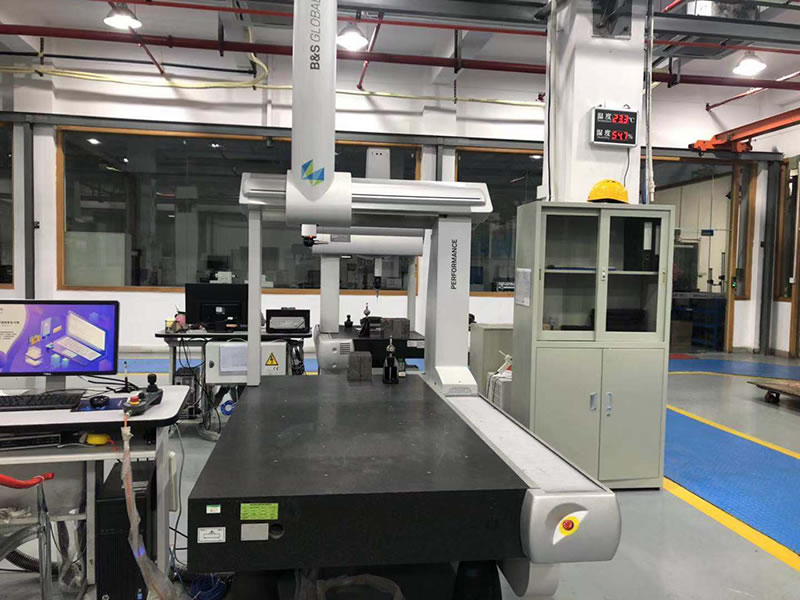
4. Machining & Inspection – After CNC milling or turning, each part is inspected on a CMM. A dimensional report is provided, comparing the new part to the scanned original. For a visual of our inspection setup, see our CMM image .
Copying a part isn’t just about dimensions—it’s about performance. We often recommend upgrading materials (e.g., from 6061 to 7075 aluminum for higher strength, or from plain carbon steel to 17-4 PH for corrosion resistance). Surface roughness must match the original’s sealing or bearing requirements; we can achieve Ra 0.4 µm for hydraulic applications. For more details on material options, visit our Custom CNC Material Tips .
Every replicated part includes a full inspection report, material certification, and, if required, a first-article inspection (FAI) per AS9102. We also store the CAD and CAM files, so reorders are frictionless—even years later. This digital archiving is a hidden benefit: you no longer rely on physical blueprints.
While additive manufacturing is popular, CNC machining provides better mechanical properties (no anisotropy), superior surface finish, and the ability to machine tight-tolerance bores and threads directly. For metal parts under cyclic loading, CNC replication remains the gold standard.
A chemical plant needed a replacement impeller for a 20-year-old centrifugal pump. The original manufacturer had no records, and the impeller was severely eroded. We scanned the surviving vanes, applied computational fluid dynamics (CFD) corrections to restore the original hydraulic profile, then machined it from duplex stainless steel. The new impeller improved flow efficiency by 8% while fitting the existing shaft and volute perfectly. The client now uses our replication service for all their legacy rotating equipment. This real case underscores why CNC copying outperforms additive alternatives when both precision and material integrity are non‑negotiable.
A recent project involved copying a custom gearbox housing for an agricultural harvester. The original cast iron housing had cracked. We 3D-scanned the broken piece, digitally “healed” the missing sections, generated toolpaths, and machined a new housing from ductile iron. The replacement was installed with zero modifications to adjacent shafts or bearings—saving the farmer $6,000 compared to a new OEM assembly.
Conclusion
Copying existing components with CNC machining is a blend of art and science—requiring skilled metrology, smart CAD reconstruction, and precise toolpath planning. Whether you need one obsolete gear or a hundred updated brackets, our proven process delivers parts that fit the first time and last longer. We invite you to send us your sample part; our engineering team will provide a free feasibility analysis and quotation. Start your replication project today at https://www.startprecision.com/ .
Frequently Asked Questions
Q1: Can you copy a part that is badly worn or has broken edges?
Yes. We use non-worn reference surfaces and symmetrical features to extrapolate the original dimensions. For broken areas, we often reference mating components (e.g., bearing diameters or bolt holes) to reconstruct the missing geometry. We can also use historical design rules (like standard gear tooth profiles) to “reverse-engineer” the intended shape.
Q2: What is the typical lead time for a replicated CNC part?
For a single simple part (e.g., a bushing or shaft), we can deliver in 3–5 business days. Complex housings with multiple cavities may take 10–15 days, depending on scanning, programming, and machining time. Rush services are available for critical breakdowns.
Q3: Do I need to provide a 3D model or drawing?
Not at all. We work directly from the physical sample. However, if you have old drawings or CAD files, they can speed up the process and improve accuracy—especially for tolerance callouts.
Q4: How do you ensure the new part fits with my existing assembly?
We measure not only the part itself but also its critical mating surfaces (shaft diameters, bolt patterns, sealing grooves). We then apply fit tolerances based on the intended function. If you provide the mating component or its measurements, we can guarantee a perfect fit.
Q5: What materials can you machine for replicated parts?
We machine virtually all machinable alloys: aluminum, steel, stainless, titanium, brass, bronze, and engineering plastics like PEEK and Acetal. We also offer heat treatment, anodizing, plating, and coating to match or improve the original surface properties.
Add: Building 3No.277 Zhen'an Middle Road, Chang'an Town,Dongguan,Guangdong, China
Tel:+86-769-82855591
Copyright © 2019 All Rights Reserved Dongguan Start Precision Technology Co., Ltd. Tel: +86-769-82855591
Add: No. 277 Zhen'an Middle Road, Chang'an Town, Dongguan, Guangdong, China



 中文版
中文版 English