Custom Liquid Cooling Plates for Aerospace Systems
Date:2026-10-03Article editor:Starting Point PrecisionViews:227As aerospace platforms push thermal limits, custom liquid cooling plates have become essential for managing heat from avionics, power electronics, and directed-energy systems. These plates must perform under extreme conditions while meeting strict weight and certification targets. This article outlines the key engineering drivers and how we deliver them.
Key Drivers for Aerospace Cold Plates
● Lightweight: Aluminum alloys and thin-wall designs reduce mass without sacrificing thermal performance.
● High Reliability: Leak-proof joints, redundant seals, and 100% pressure testing ensure mission-critical operation.
● Environmental Resistance: Corrosion, vibration, thermal cycling, and altitude are addressed through material selection and coatings.
● Certification: Compliance with AS9100, NADCAP, and SAE/ASTM standards is mandatory.
Material Comparison for Custom Liquid Cooling Plates
| Material | Thermal Conductivity (W/mK) | Weight | Corrosion Resistance | Typical Aerospace Use |
| Aluminum 6061 | 167 | Low | Good | Avionics cold plates |
| Copper C110 | 391 | High | Excellent | High heat flux modules |
| Titanium Grade 5 | 21 | Medium | Excellent | Aggressive environments |
| Aluminum 5052 | 138 | Low | Better | Fuel-cooled systems |
How We Manufacture Custom Liquid Cooling Plates
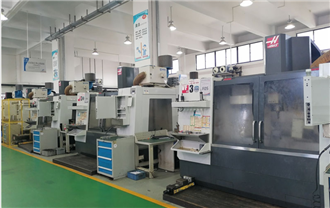
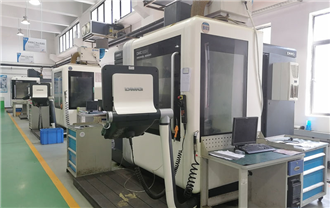
We begin with thermal simulation and CFD to optimize channel geometry. From the precision equipment list, we utilize 5-axis CNC machining centers, vacuum brazing furnaces, and CMM inspection systems. Our process includes:
1. Lightweighting: Generative design and additive manufacturing create complex internal channels with minimal mass.
2. High Reliability: Vacuum brazing and friction stir welding produce hermetic joints. Every unit undergoes helium leak testing and burst pressure testing.
3. Environmental Resistance: Conversion coatings, anodizing, and salt spray testing validate protection against corrosion and vibration.
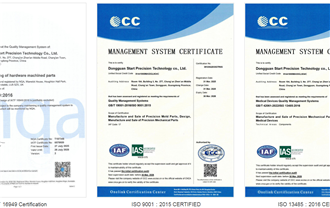
4. Certification: We maintain AS9100D and NADCAP approvals, with full traceability and documentation.
For external standards, refer to SAE International and ASTM. NASA thermal guidelines are available at NASA Technical Reports.
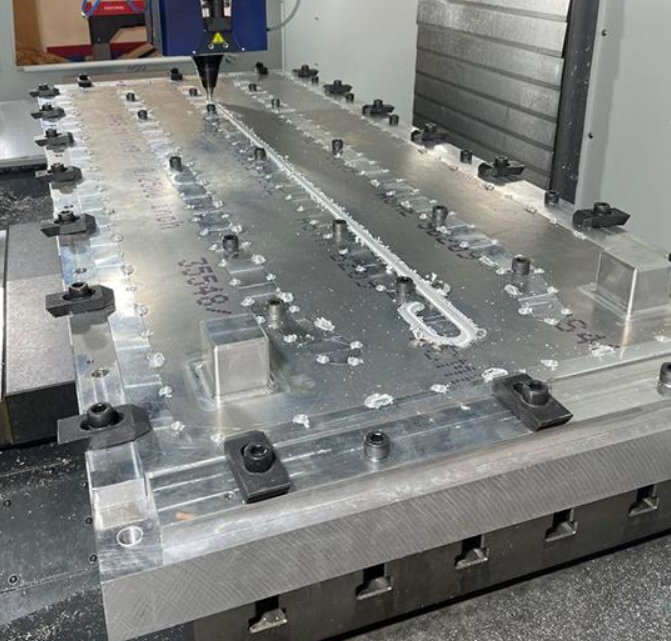
A custom liquid cooling plate
Learn more about our precision manufacturing capabilities at Start Precision.
Contact us to discuss your manufacturing needs.
FAQ
Q1: What materials are best for aerospace cold plates?
A: Aluminum and copper alloys are common, selected based on thermal load, weight, and environmental exposure.
Q2: How do you ensure leak-free performance?
A: We perform helium leak testing and burst pressure testing on every unit, with redundant seal designs where required.
Q3: What certifications do you hold?
A: We maintain AS9100D, NADCAP, and ITAR registration, ensuring compliance with aerospace quality standards.
Q4: Can you handle low-volume production?
A: Yes, we support prototypes through full-rate production, with scalable processes and traceability.

Add: Building 3No.277 Zhen'an Middle Road, Chang'an Town,Dongguan,Guangdong, China
Tel:+86-769-82855591
Copyright © 2019 All Rights Reserved Dongguan Start Precision Technology Co., Ltd. Tel: +86-769-82855591
Add: No. 277 Zhen'an Middle Road, Chang'an Town, Dongguan, Guangdong, China



 中文版
 English