Custom Liquid Cooling Plate Processing Services | Leak Testing
Date:2026-09-21Article editor:Starting Point PrecisionViews:209As power densities in electronics, EV battery packs, and data center servers continue to climb, effective thermal management has become a defining engineering challenge. Custom liquid cooling plates sit at the center of this challenge, and their performance depends on two things: precision manufacturing and reliable leak testing. This article explains how these plates are processed, how leak testing works, and what to look for in a manufacturing partner.
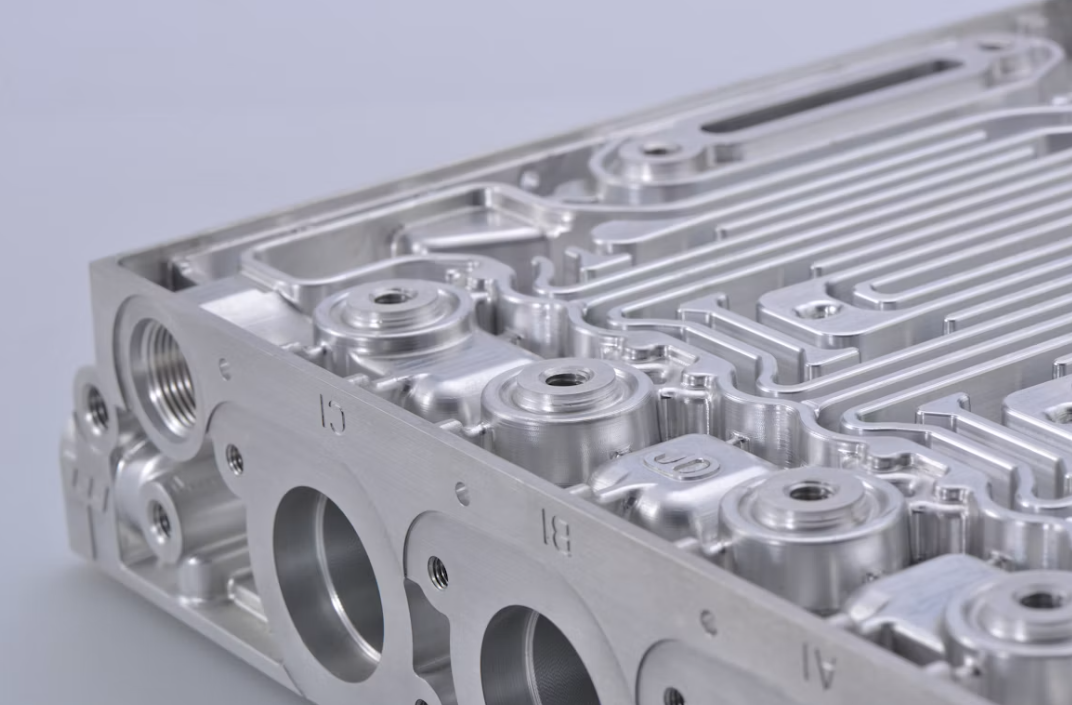
Standard cold plates rarely fit modern, compact designs. Custom plates are engineered to match specific chip layouts, flow rates, and space constraints. They are widely used in:
● EV battery modules – maintaining uniform cell temperature
● Data center CPUs/GPUs – handling high heat flux
● Power electronics – IGBT and inverter cooling
● Medical and laser equipment – stable thermal control
Manufacturing a reliable cooling plate involves several tightly controlled stages. Here is a typical workflow:
| Stage | Process | Purpose |
| 1 | Design review & DFM | Optimize channel geometry and wall thickness |
| 2 | CNC machining | Cut flow channels, ports, and mounting features |
| 3 | Vacuum brazing / FSW | Bond plates without weakening the material |
| 4 | Surface treatment | Improve corrosion resistance |
| 5 | Leak testing | Verify airtightness before delivery |
Each stage builds on the last. A flaw in channel geometry or a weak braze joint will surface during leak testing, which is why the process is treated as a final gate rather than a standalone step.
Leak testing is not a single test — it is a layered verification process. Depending on the application, we combine methods to catch different failure modes.
| Method | Sensitivity | Best For |
| Helium mass spectrometry | Very high | Sealed, high-value assemblies |
| Pressure decay | Medium | Production-line batch testing |
| Bubble immersion | Low–medium | Quick visual verification |
| Flow and burst testing | Variable | Structural integrity checks |
For example, a helium leak test can detect leaks as small as 1×10⁻⁹ mbar·L/s, making it suitable for EV battery cold plates where even a microscopic leak can cause coolant loss over years of service. Pressure decay testing, by contrast, is faster and better suited to high-volume production.
At Start Precision, custom liquid cooling plate projects begin with a DFM review, not a quote. Engineers examine channel design, material selection, and brazing feasibility before machining starts. This step often prevents costly rework later.
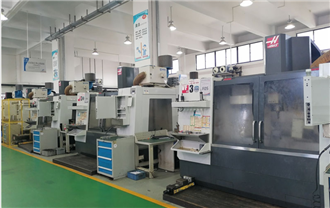
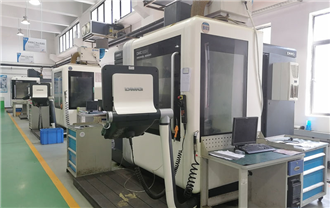
During production, in-process checks monitor channel depth, flatness, and port alignment. After brazing, every plate undergoes leak testing using helium mass spectrometry or pressure decay, depending on the customer's specification. Test data is recorded and traceable, which matters for industries like automotive and medical where documentation is part of compliance.
Leaks usually trace back to a few root causes:
● Porosity in braze joints – controlled by furnace profile and filler metal selection
● Incomplete channel sealing – prevented by precise CNC tolerances
● Material stress cracks – reduced through proper annealing
● Damaged sealing surfaces – avoided with protective handling and inspection
Understanding these causes helps buyers ask the right questions during supplier qualification. For reference on leak testing standards, ASTM E499 provides recognized guidance on helium leak detection methods.
Custom cooling plates are no longer limited to a single sector. The table below shows where demand is growing fastest.
| Industry | Typical Requirement |
| EV / Battery | Large-format plates, high flow uniformity |
| Data Center | Compact plates, low thermal resistance |
| Renewable Energy | Corrosion-resistant materials |
| Aerospace | Lightweight, high-reliability sealing |
Each application places different demands on leak testing. A data center cold plate may tolerate a slower decay rate, while an aerospace unit may require helium testing with full documentation.
When evaluating suppliers, look for:
1. In-house machining and brazing – fewer handoffs, better quality control
2. Documented leak test results – not just a pass/fail stamp
3. DFM support – early feedback saves time and cost
4. Material traceability – critical for regulated industries
A partner who treats leak testing as an engineering discipline, not a checkbox, will deliver plates that perform reliably over the product's full lifecycle.
Contact us to discuss your manufacturing needs. Whether you need prototype quantities or production volumes, our team can review your cooling plate design and recommend the right processing and testing approach.
Q1: What is the difference between helium leak testing and pressure decay testing?
Helium testing detects extremely small leaks using a mass spectrometer, while pressure decay measures pressure loss over time. Helium is more sensitive; pressure decay is faster and cheaper for high-volume production.
Q2: Can custom liquid cooling plates be made from copper and aluminum?
Yes. Copper offers better thermal conductivity, while aluminum is lighter and more cost-effective. The choice depends on the application's thermal load, weight limits, and coolant compatibility.
Q3: How do I know if my cooling plate design is manufacturable?
A DFM review is the best first step. It evaluates channel geometry, wall thickness, brazing feasibility, and leak test accessibility before production begins.
Q4: What leak rate is considered acceptable for EV battery cooling plates?
Acceptable leak rates vary by specification, but many EV applications require helium leak rates below 1×10⁻⁶ mbar·L/s to ensure long-term coolant retention.
Q5: Does leak testing add significant cost to production?
The cost depends on the method and volume. Helium testing costs more per unit but is often necessary for safety-critical parts. Pressure decay testing can be cost-effective for larger batches.

Add: Building 3No.277 Zhen'an Middle Road, Chang'an Town,Dongguan,Guangdong, China
Tel:+86-769-82855591
Copyright © 2019 All Rights Reserved Dongguan Start Precision Technology Co., Ltd. Tel: +86-769-82855591
Add: No. 277 Zhen'an Middle Road, Chang'an Town, Dongguan, Guangdong, China



 中文版
 English