Precision Engineered for Extreme Environments: CNC Machining in Heat Treatment Equipment
Date:2026-01-24Article editor:Starting Point PrecisionViews:655The effectiveness of heat treatment processes—such as annealing, hardening, and tempering—directly determines the performance and lifespan of metal components. At the heart of these critical thermal processes lies the equipment itself, whose reliability depends on the precision and durability of its internal parts. CNC machining has emerged as the fundamental manufacturing method for producing the high-integrity furnace components and quenching tools that must withstand extreme temperatures, thermal cycling, and corrosive atmospheres.
Why CNC Machining is Non-Negotiable for Heat Treatment Components
Heat treatment equipment operates under severe stress. Components are exposed to temperatures exceeding 1200°C, rapid quenching in oil or water, and often reactive gas environments. CNC machining meets this challenge by enabling the production of parts with:
Superior Material Integrity: Machining from solid blocks of high-temperature alloys ensures grain structure continuity and eliminates defects common in cast parts.
Exceptional Dimensional Stability: Precise tolerances are critical for sealing (e.g., furnace door fit), gas flow management, and fixture alignment to prevent part distortion during treatment. Standards like AMS 2750 govern pyrometric requirements in such environments.
Complex Functional Geometry: CNC allows for integrated cooling channels in quenching fixtures, intricate radiant tube shapes, and precise thread forms for robust assembly in hot zones.
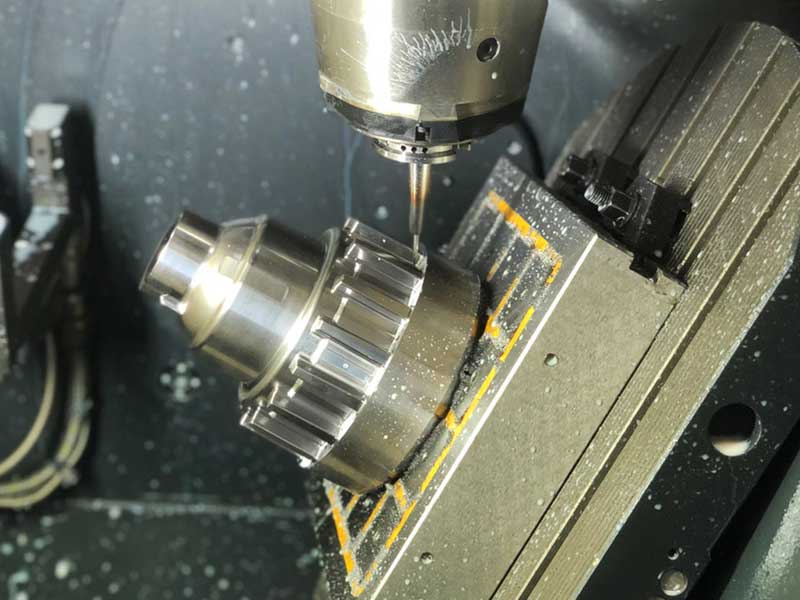
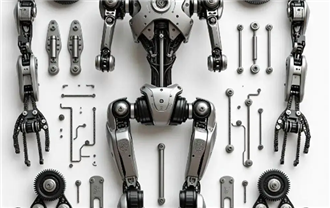
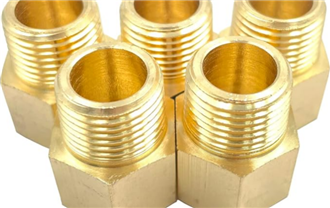
A photo of a CNC-machined
Critical CNC-Machined Furnace Components
1. Heating Chamber & Internal Elements
Radiant Tubes & Muffles: These contain the heating elements or process atmosphere. CNC machining guarantees uniform wall thickness and precise shaping from alloys like RA330 or Inconel 601. ensuring even heat distribution and long service life.
Quench System Components: Agitator shafts, impellers, and diffusion plates are machined for perfect balance and durability to ensure uniform, rapid quenching—a key factor in achieving desired material hardness.
Fans & Blowers: Critical for atmosphere circulation, their balanced, high-integrity construction from heat-resistant alloys prevents failure at high temperatures.
2. Fixturing, Baskets, & Quenching Tools
Work Baskets and Trays: These hold parts during treatment. CNC-machined from high-temperature steels or nickel alloys, they resist creep and distortion, maintaining part spacing for consistent results.
Fixtures & Jigs: Custom fixtures for critical aerospace or automotive parts are precision-machined to hold components in a specific configuration, preventing warping during the thermal cycle.
Quenching Press Dies & Forms: Used in press quenching operations, these massive, intricate tools are CNC-machined to exacting profiles to shape and cool parts simultaneously.
Advanced Materials for Demanding Applications
The material choice is paramount for component survival and process purity:
Heat-Resistant Alloys (RA330. Inconel 600/601): The standard for hot zone components, offering excellent strength and carburization resistance.
Graphite & Carbon Composites: Machined into fixtures and heating elements for vacuum furnaces, offering high thermal conductivity and minimal outgassing.
Tool Steels (H13. P20): Used for quenching fixtures and dies that must withstand thermal shock and mechanical abuse.
Stainless Steel (316. 310): Employed for lower-temperature zones, atmosphere piping, and structural frames.
Quality & Surface Finish: The Details that Matter
Beyond dimensional accuracy, surface finish is critical. A smooth, machined finish reduces carbon buildup (coking), improves cleanability, and minimizes sites for potential failure. Post-machining processes like electropolishing can enhance corrosion resistance and cleanability for vacuum or aerospace applications.
The Operational Impact of Precision Parts
Investing in precision CNC-machined components yields significant returns:
Increased Uptime: Durable parts reduce unplanned furnace downtime for replacements.
Process Consistency: Precise fixtures and uniform heating elements ensure repeatable metallurgical results, reducing scrap.
Energy Efficiency: Properly fitted seals and optimized radiant components improve thermal efficiency, lowering operating costs.
Conclusion
In the precise science of heat treatment, the margin for error is minimal. The performance of the furnace, quench system, and fixtures directly defines the quality of the treated components. By utilizing advanced CNC machining to produce critical parts from specialized alloys, manufacturers of heat treatment equipment can guarantee reliability, repeatability, and longevity for their clients. These precision components are the unsung guardians of material properties, forming the essential foundation for high-performance metals across aerospace, automotive, and tooling industries.
Add: Building 3No.277 Zhen'an Middle Road, Chang'an Town,Dongguan,Guangdong, China
Tel:+86-769-82855591
Copyright © 2019 All Rights Reserved Dongguan Start Precision Technology Co., Ltd. Tel: +86-769-82855591
Add: No. 277 Zhen'an Middle Road, Chang'an Town, Dongguan, Guangdong, China



 中文版
中文版 English