Copper Machining Services with ISO 9001
Date:2026-10-08Article editor:Starting Point PrecisionViews:139Copper is widely selected for applications requiring outstanding electrical conductivity, thermal transfer capability, and corrosion resistance. From electrical components to advanced cooling systems, copper parts often need complex geometries and stable dimensional accuracy.
However, machining copper is not as simple as processing common metals. Its softness, high thermal conductivity, and tendency to produce continuous chips require carefully controlled cutting strategies. For industries demanding consistent performance, Copper Machining Services with ISO 9001 provide a reliable manufacturing approach based on standardized processes, inspection control, and continuous improvement.
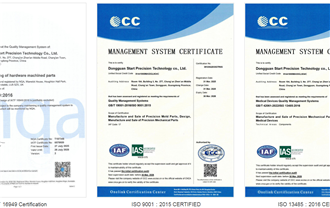
ISO 9001 quality management focuses on creating repeatable manufacturing systems rather than relying only on final inspection. In copper machining projects, this approach helps control each production stage, from material preparation to finished part delivery.
Important quality advantages include:
• Controlled production procedures: Manufacturing steps are clearly defined to reduce unexpected variations.
• Complete process tracking: Material information, machining records, and inspection results can be maintained for better traceability.
• Consistent part quality: Standardized workflows help achieve stable dimensions across prototypes and production batches.
• Improved customer confidence: Quality systems provide customers with greater assurance for critical copper applications.
More information about ISO 9001 quality principles is available through the official ISO quality management standard.
Professional copper machining requires balancing cutting efficiency with surface quality. Excessive cutting force may deform thin walls, while unsuitable parameters can affect tool life and finish quality.
A typical manufacturing process includes:
• Drawing and requirement evaluation: Engineers review part geometry, tolerance requirements, surface specifications, and application conditions.
• Copper material preparation: The suitable copper grade is selected according to electrical, thermal, or mechanical requirements.
• CNC machining operations: Milling, turning, drilling, and threading processes are optimized for copper characteristics.
• Precision feature finishing: Critical surfaces, mounting areas, and functional details receive additional machining attention.
• Inspection and verification: Finished parts are measured to confirm compliance with technical requirements.
Through a combination of engineering experience and quality management, Start Precision supports customized CNC manufacturing solutions. Visit the official website for more information: https://www.startprecision.com/
Copper parts are frequently used in industries where accuracy and material performance are essential. Typical components include electrical connectors, thermal transfer parts, vacuum equipment components, and precision industrial fittings.
| Machining Capability | Application Benefit |
| CNC Milling | Creates complex copper structures and precision features |
| CNC Turning | Produces cylindrical components with accurate dimensions |
| Precision Finishing | Improves surface quality and functional performance |
| Quality Inspection | Ensures parts meet drawing specifications |
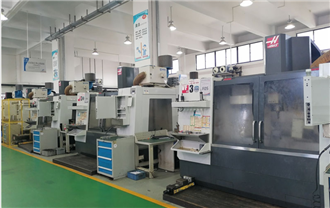
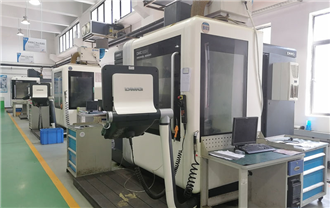
For details about available machining equipment and production capabilities, refer to Start Precision’s precision machining page:
https://www.startprecision.com/precision/
Copper machining services support a wide range of industries where reliability and performance are critical.
Common applications include:
• Electrical systems: Copper components used for efficient current transmission.
• Thermal management equipment: Copper plates and heat transfer components for cooling applications.
• Semiconductor equipment: Precision copper parts requiring stable dimensions and clean surfaces.
• Vacuum technology: Copper components used in specialized environments requiring tight manufacturing control.
• Industrial machinery: Custom copper parts designed for demanding operating conditions.
A technology company required custom copper cooling components with accurate channels and reliable thermal performance. The main challenge was maintaining dimensional stability while machining complex internal features.
The production solution included:
• Reviewing the 3D model and technical requirements.
• Selecting suitable copper material based on heat transfer needs.
• Using CNC machining strategies designed for copper processing.
• Performing detailed dimensional inspection after machining.
• Preparing finished components according to shipment requirements.
The controlled machining process helped deliver copper parts with consistent quality and dependable performance.
Selecting the right machining supplier is important for projects involving copper materials. A capable manufacturer should provide:
• Experience with different copper grades and applications.
• Professional CNC machining capability.
• Reliable inspection and documentation processes.
• Flexible support for prototypes and production orders.
• Stable communication throughout the manufacturing process.
A quality-focused machining partner helps reduce production risks and ensures copper components perform as expected in real applications.
Contact us to discuss your manufacturing needs and discover a reliable copper machining solution for your project.
Q1: What are Copper Machining Services with ISO 9001?
Copper Machining Services with ISO 9001 are CNC manufacturing services performed under an ISO 9001-based quality management system to maintain consistent production standards and inspection procedures.
Copper transfers heat quickly and is relatively soft, which means improper machining conditions can cause deformation, tool wear, or poor surface quality.
Common materials include pure copper, C110 copper, brass, bronze, and other copper alloys selected according to electrical, thermal, and mechanical requirements.
Yes. Professional CNC manufacturers can provide prototype machining, small-batch production, and larger-volume manufacturing while maintaining controlled quality procedures.
Inspection methods may include dimensional measurement, surface checks, material verification, and final quality review based on customer specifications.
Add: Building 3No.277 Zhen'an Middle Road, Chang'an Town,Dongguan,Guangdong, China
Tel:+86-769-82855591
Copyright © 2019 All Rights Reserved Dongguan Start Precision Technology Co., Ltd. Tel: +86-769-82855591
Add: No. 277 Zhen'an Middle Road, Chang'an Town, Dongguan, Guangdong, China



 中文版
 English