Humanoid Robot Parts with Precision Gears
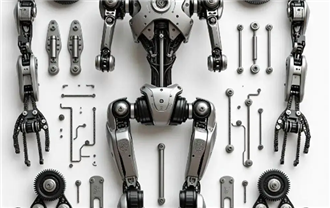
Date:2026-10-07Article editor:Starting Point PrecisionViews:173Humanoid robots must move like humans—smoothly, accurately, and reliably. Unlike fixed industrial robotic arms, they depend on compact, lightweight joints that handle dynamic loads. At the core of every natural step, grasp, and gesture are precision gears. Without them, motion becomes jerky, inaccurate, or short-lived.
Three requirements define success: low backlash, high precision, and long life.
| Requirement | Humanoid Robot Need | Our Approach |
| Low backlash | Stable balance, accurate joint positioning | Sub-arc-minute grinding and lapping |
| High precision | Repeatable tasks, smooth trajectories | CNC gear grinding and CMM verification |
| Long life | Millions of cycles, low downtime | Case-hardened alloys and endurance testing |
① Low Backlash: Stable, Natural Joint Motion
Backlash is the play between meshing gear teeth. In a humanoid robot, even tiny amounts cause positioning errors. The robot may wobble while walking or miss a delicate assembly task.
We achieve sub-arc-minute backlash through precision grinding and lapping. Every tooth flank is controlled to micron-level tolerances. This eliminates lost motion, giving humanoid joints the stiffness and responsiveness they need for balance and manipulation.
② High Precision: Repeatable Movement Every Cycle
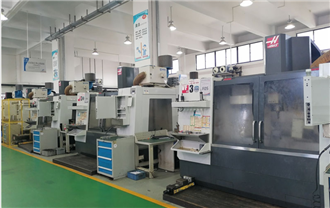
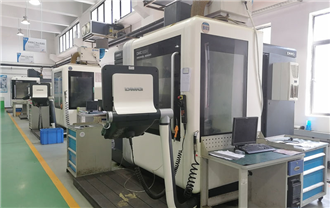
High precision means every movement lands exactly where intended—millions of times. We use CNC gear grinding and coordinate measuring machines (CMM) to verify each gear before shipment. Our precision equipment list includes advanced grinding and metrology systems that ensure repeatable accuracy.
For humanoid robots, this precision translates into reliable balance, consistent grip force, and smooth trajectory control. Whether the robot is climbing stairs or handing you a tool, the drivetrain performs without drift.
③ Long Life: Engineered for Millions of Cycles
Humanoid robots operate continuously, often in unpredictable environments. Gears must endure millions of cycles without failure. We select case-hardened steels and apply proprietary heat treatments. Rigorous endurance testing simulates humanoid joint cycles—flexions, rotations, and load reversals—so you can trust our gears in the field.
Research from the IEEE Robotics and Automation Society and projects like NASA’s Valkyrie robot confirm that precision drivetrains are essential for robust humanoid locomotion.

1. Joint specification review — torque, speed, size, and duty cycle.
2. Gear design and simulation — tooth profile, material, and lubrication.
3. Precision manufacturing — grinding, lapping, and heat treatment.
4. Metrology and validation — CMM inspection and endurance testing.
5. Pilot to production — scalable output with consistent quality.
At Start Precision, we work with you from prototype to production, delivering custom gears that match your joint specifications.
● Service and companion robots
● Research humanoids
● Assistive and medical robotics
● Commercial humanoid platforms
Contact us to discuss your manufacturing needs.
1. What is backlash in humanoid robot gears?
Backlash is the clearance between meshing gear teeth. Low backlash means less lost motion, which is essential for accurate joint positioning.
2. How do precision gears extend humanoid robot life?
Precision manufacturing reduces stress concentrations and wear. Combined with proper heat treatment and lubrication, gears can last millions of cycles.
3. Can precision gears be customized for humanoid joints?
Yes. We tailor module, tooth profile, material, and heat treatment to your specific torque, speed, and space constraints.
4. Do you only make gears, or complete humanoid robot parts?
We focus on precision gear components and assemblies. We can integrate gears into your joint housing or supply stand-alone parts.
Add: Building 3No.277 Zhen'an Middle Road, Chang'an Town,Dongguan,Guangdong, China
Tel:+86-769-82855591
Copyright © 2019 All Rights Reserved Dongguan Start Precision Technology Co., Ltd. Tel: +86-769-82855591
Add: No. 277 Zhen'an Middle Road, Chang'an Town, Dongguan, Guangdong, China



 中文版
 English