Robotic Parts Manufacturer with OEM Services
Date:2026-09-29Article editor:Starting Point PrecisionViews:180Humanoid robots are moving from research laboratories toward real-world applications such as healthcare assistance, smart manufacturing, logistics, and service environments. Behind every advanced humanoid robot is a complex system of precision mechanical components, including structural frames, joint parts, actuator housings, and lightweight metal assemblies. The performance of these components directly affects robot movement accuracy, stability, and durability.
Custom Humanoid Robot Parts Manufacturing Requirements
Humanoid robot parts require more than conventional machining capabilities. Unlike industrial robotic arms, humanoid robots need components that support human-like motion, compact structures, and repeated dynamic loads.
Key manufacturing requirements include:
● High dimensional accuracy: Critical joint and transmission parts require stable tolerances to ensure smooth movement.
● Lightweight material solutions: Aluminum alloys, titanium alloys, and engineering metals are commonly selected to reduce weight while maintaining strength.
● Complex geometric machining: Robot frames and mechanical modules often include curved surfaces, internal pockets, and multi-angle features.
● Consistent OEM production: Prototype validation and batch manufacturing require repeatable processes.
For precision CNC machining capabilities and customized manufacturing solutions, visit Start Precision to learn more about OEM part production.
As a robotic parts manufacturer with OEM services, the production process focuses on engineering collaboration, machining accuracy, and quality consistency.
The process starts with customer CAD files, 3D models, and technical drawings. Engineers review:
● Part structure and machining feasibility
● Material selection
● Critical dimensions and tolerance requirements
● Assembly interfaces
Early manufacturing analysis helps reduce machining risks and improve production efficiency.
Based on the application requirements, suitable materials are selected, such as aluminum alloy for lightweight structures or titanium alloy for high-strength components.
Advanced CNC machining methods are used to manufacture humanoid robot parts, including:
● CNC milling for complex brackets, frames, and housings
● CNC turning for shafts and cylindrical components
● Multi-axis machining for complicated surfaces
● Precision drilling and threading for assembly connections
The machining strategy is adjusted according to each part’s function rather than applying a fixed production route.
After machining, components can receive suitable surface treatments to improve:
● Wear resistance
● Corrosion protection
● Surface appearance
● Long-term operational reliability
Different finishes are selected according to robot application requirements and customer specifications.
Before shipment, manufactured parts are inspected according to drawing requirements. Inspection focuses on:
● Dimensional accuracy
● Surface quality
● Critical feature verification
● Assembly compatibility
This ensures every component meets the expected requirements for humanoid robot development and production.
A reliable OEM partner needs to support different project stages, from early prototypes to repeat production.
Typical support includes:
| Service Stage | Manufacturing Support |
| Prototype Development | Rapid CNC machining for functional testing |
| Design Optimization | Manufacturing feedback for improving part structures |
| Small Batch Production | Flexible production for robot development |
| Mass Production | Stable machining processes and quality control |
For robotics manufacturers, OEM machining support can shorten development cycles and improve supply chain stability. General information about robotics technologies can also be explored through International Federation of Robotics.
A humanoid robot development company required lightweight metal components for a new robotic motion system. The parts included structural brackets and precision connection components designed for repeated movement.
The manufacturing approach included material evaluation, CNC milling of complex structures, precision machining of mounting interfaces, and final dimensional inspection. By optimizing machining methods and maintaining consistent quality control, the components achieved reliable assembly performance during testing.
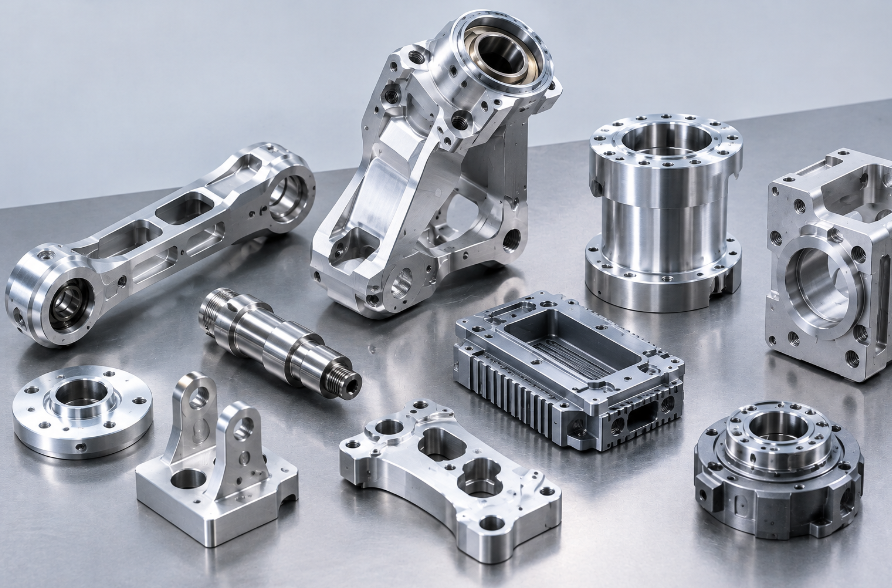
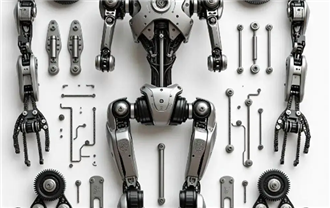
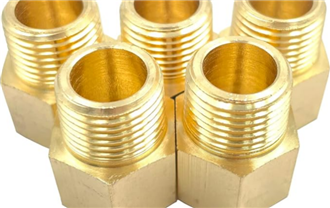
Custom humanoid robot CNC machined parts
Working with an experienced robotic parts manufacturer helps companies achieve:
● Customized production based on engineering drawings
● Better control over part accuracy and consistency
● Support from prototype to production stages
● Reduced communication complexity through direct manufacturing cooperation
Humanoid robot development requires mechanical parts that combine precision, strength, and lightweight design. Professional OEM machining services provide the manufacturing foundation needed for next-generation robotic systems.
Contact us to discuss your manufacturing requirements.
Q1: What types of humanoid robot parts can you manufacture?
We manufacture various metal components for humanoid robots, including structural frames, joint components, actuator housings, brackets, shafts, and customized mechanical parts.
Yes. OEM machining services can support prototype verification, small-batch production, and ongoing manufacturing requirements.
Common materials include aluminum alloys, stainless steel, titanium alloys, and other engineering metals selected according to strength, weight, and application needs.
Yes. Production can be based on customer CAD files, drawings, samples, or technical specifications.
Quality control includes dimensional inspection, process monitoring, and final verification to ensure manufactured components meet customer requirements.
Add: Building 3No.277 Zhen'an Middle Road, Chang'an Town,Dongguan,Guangdong, China
Tel:+86-769-82855591
Copyright © 2019 All Rights Reserved Dongguan Start Precision Technology Co., Ltd. Tel: +86-769-82855591
Add: No. 277 Zhen'an Middle Road, Chang'an Town, Dongguan, Guangdong, China



 中文版
 English