Custom Copper Parts with Complex Geometry
Date:2026-10-09Article editor:Starting Point PrecisionViews:182Custom copper components with complex geometry are designed for applications that require more than simple holes, flat surfaces, or standard cylindrical profiles. They may incorporate curved contours, recessed contact areas, intersecting passages, narrow slots, and precisely positioned mounting features.
Copper is widely selected for its electrical and thermal conductivity. However, machining intricate copper parts requires careful control of cutting forces, tool geometry, workpiece positioning, and burr formation. A manufacturing strategy tailored to the part's geometry helps achieve reliable dimensions without compromising functional surfaces.
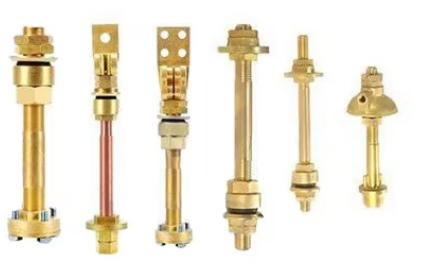
The difficulty of machining a copper component depends on its shape, material grade, tolerances, and intended function.
● Complex contours: Deep recesses and irregular profiles require toolpaths that provide sufficient cutting access while avoiding tool interference.
● Thin structural sections: Delicate walls can deform under clamping pressure or cutting loads.
● Precision openings: Closely spaced holes and narrow slots require accurate positioning and suitable cutting tools.
● Functional surfaces: Electrical contacts and thermal interfaces may need controlled flatness, surface finish, and edge quality.
Material properties and application requirements should be reviewed early. The Copper Development Association offers useful technical information about copper materials and their industrial applications.
At Start Precision, a practical manufacturing plan begins with understanding the component's functional requirements and identifying the features that most strongly influence quality.
1. Review Drawings and Critical Features
We evaluate 2D engineering drawings and 3D CAD models to identify tolerance requirements, datum references, wall thicknesses, hole positions, and surface finish specifications. Features that are difficult to reach with standard cutting tools are assessed before machining begins.
2. Confirm the Copper Material
Copper grade selection depends on conductivity, thermal requirements, strength, and machinability. The material must satisfy the component's operating conditions while remaining suitable for the proposed machining operations.
3. Develop Toolpaths and Workholding
The machining sequence is planned around stable reference surfaces. Suitable fixtures help prevent movement, while toolpath planning reduces unnecessary repositioning and supports access to complex features.
4. Machine the Main Geometry
CNC milling is used to produce pockets, slots, curved profiles, and mounting surfaces. CNC turning can create cylindrical sections, bores, and concentric features where required. Combining these processes may reduce repeated setups and improve consistency between related surfaces.
5. Remove Burrs and Finish Surfaces
After machining, accessible edges and openings are carefully deburred. Surface finishing is selected according to the part's purpose, whether it serves as an electrical contact, a heat-transfer interface, or a precision assembly component.
6. Verify Dimensions and Quality
Inspection focuses on critical dimensions, hole locations, flatness, and mating surfaces. Additional electrical or other functional tests can be included when specified by the customer.
| Part feature | Suitable machining approach | Inspection priority |
| Curved external profiles | CNC contour milling | Profile accuracy |
| Recessed surfaces | Pocket milling | Depth and surface finish |
| Closely positioned holes | CNC drilling and boring | Position and diameter |
| Narrow alignment slots | Precision slot milling | Width and edge quality |
| Cylindrical contact sections | CNC turning | Concentricity and diameter |
The final process depends on the actual drawing; not every component requires every operation listed above.
A power equipment manufacturer may require a copper contact block featuring a recessed connection surface, several mounting holes, a narrow positioning slot, and stepped outer edges.
The process starts by confirming the copper grade and identifying the contact surface as a critical reference. The main profile is machined first, followed by the mounting holes and recessed features. The slot is then produced using an appropriate cutter, with workholding arranged to minimize movement in thinner sections.
Following deburring, inspection verifies the hole positions, slot dimensions, and contact surface geometry. This sequence helps the component align correctly during assembly and supports its intended electrical function.
Custom copper components with intricate geometry are suitable for electrical terminals, power distribution equipment, thermal management assemblies, precision electrodes, and specialized industrial systems.
Successful production depends on more than machining capability. Clear drawings, appropriate material selection, realistic tolerances, and an agreed inspection plan all contribute to consistent results.
Explore Start Precision's manufacturing services to learn more. Contact us to discuss your manufacturing needs and submit your drawings for a project assessment.
1. Can complex copper geometries be produced with CNC machining?
Yes. CNC milling and turning can produce many intricate profiles, recessed areas, slots, and precision holes. The achievable geometry depends on tool access, material condition, and specified tolerances.
2. How do manufacturers prevent deformation in thin copper parts?
They can use suitable fixtures, controlled clamping pressure, carefully selected cutting parameters, and an appropriate machining sequence. The exact strategy depends on part geometry and material grade.
3. What information is needed for a quotation?
Provide a 2D drawing or 3D CAD model, copper grade, quantity, dimensional tolerances, surface finish requirements, and any special inspection criteria.
4. Can custom copper parts be manufactured for both prototypes and production?
Yes. CNC machining can support initial samples, design verification, and repeat production. Fixture design and process planning can be adapted to the required volume.
Add: Building 3No.277 Zhen'an Middle Road, Chang'an Town,Dongguan,Guangdong, China
Tel:+86-769-82855591
Copyright © 2019 All Rights Reserved Dongguan Start Precision Technology Co., Ltd. Tel: +86-769-82855591
Add: No. 277 Zhen'an Middle Road, Chang'an Town, Dongguan, Guangdong, China



 中文版
 English