Robotic Parts Manufacturer for Custom Joints
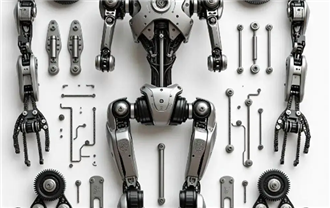
Date:2026-10-09Article editor:Starting Point PrecisionViews:189A humanoid robot must coordinate multiple joints to perform actions such as walking, reaching, bending, and maintaining balance. Each joint contains mechanical interfaces that connect moving structures while supporting repeated loads and precise positioning. Even a small dimensional deviation can affect assembly alignment or introduce unwanted movement.
Choosing a capable Robotic Parts Manufacturer for Custom Joints helps developers turn specialized joint designs into practical metal components. The manufacturing approach should consider structural strength, weight distribution, motion requirements, and the relationship between individual parts.
Learn more about customized manufacturing capabilities at Start Precision.
Humanoid robot joints rarely follow one universal design. Shoulder, elbow, hip, knee, and ankle mechanisms face different space constraints and loading conditions.
Before machining begins, the manufacturing team reviews the supplied drawings or 3D models to identify critical features.
● Geometry assessment: Examine bearing seats, motor interfaces, mounting holes, and connecting surfaces.
● Machining feasibility: Identify deep cavities, narrow slots, thin walls, and other features that may require specialized tooling.
● Structure optimization: Evaluate opportunities to reduce unnecessary material without compromising required rigidity.
● Tolerance planning: Determine which dimensions and positional relationships directly affect assembly and movement.
Early engineering feedback can help prevent avoidable machining difficulties and reduce costly design changes during prototype development.
Material selection depends on the mechanical demands of each joint rather than weight reduction alone.
● Aluminum alloys: Suitable for lightweight housings, motor mounts, and structural brackets where a favorable strength-to-weight ratio is important.
● Titanium alloys: Worth considering for demanding applications that require high specific strength and corrosion resistance.
● Stainless steel: Useful for selected load-bearing interfaces, shafts, and components exposed to wear or corrosive conditions.
The final choice should account for load, fatigue exposure, machining complexity, cost, and any surface treatment planned for the component.
After the design and material are confirmed, the machining plan is developed around the component's functional geometry.
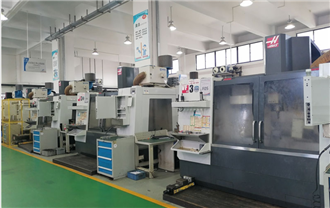
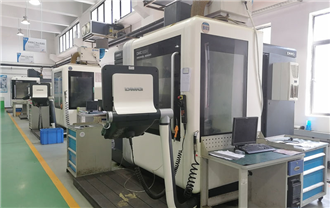
● CNC milling produces mounting faces, pockets, curved profiles, and structural features.
● CNC turning creates cylindrical interfaces and shaft-related geometries where applicable.
● Secondary drilling, threading, and precision finishing establish connection points for motors, bearings, and fasteners.
● Dimensional inspection checks critical diameters, hole positions, flatness, and other drawing requirements.
Suitable fixtures and consistent datum references help maintain relationships between features, especially when several surfaces must align during assembly.
Manufacturing methods and material standards can also be researched through the National Institute of Standards and Technology (NIST), a technical resource for manufacturing science and measurement.
A joint component's surface condition influences corrosion resistance, wear behavior, and compatibility with adjacent parts.
Depending on the base material and application, finishing options may include anodizing for aluminum, passivation for stainless steel, or suitable plating for specified functional surfaces.
The finishing plan must account for dimensional changes. Bearing seats, precision fits, threaded holes, and electrical contact areas may require masking or additional verification. The selected treatment should follow the engineering drawing and operating requirements rather than appearance alone.
Consider a hypothetical humanoid robot project requiring a compact knee joint housing with multiple bearing seats and motor mounting features.
The manufacturing team first reviews the housing geometry and identifies the interfaces that determine alignment. Aluminum alloy is selected to support the project's weight target. CNC milling creates the housing pockets and mounting features, while critical bores receive additional dimensional verification.
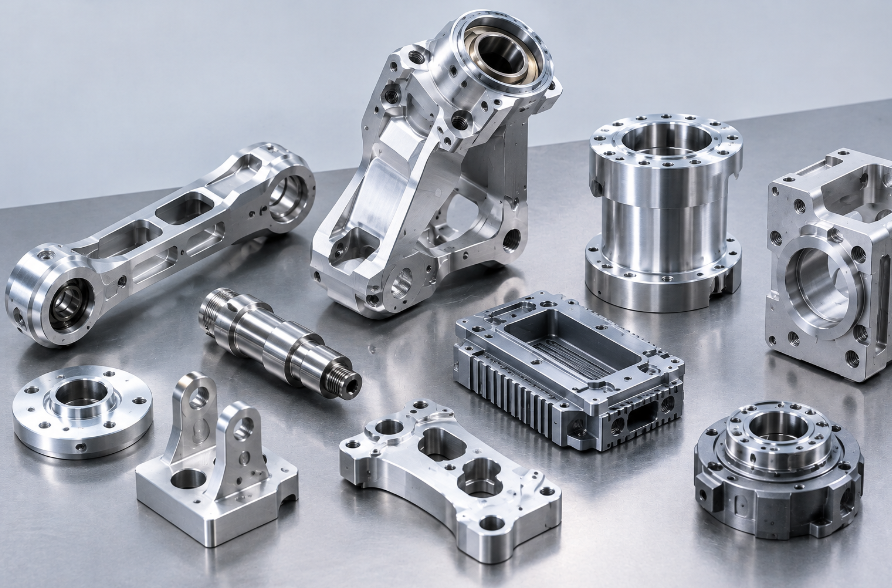
An appropriate surface treatment is then selected for the exposed aluminum surfaces, with precision interfaces protected as required. Before shipment, the part is checked against the approved drawing.
This example illustrates how design review, material selection, machining, and finishing work together. Actual performance depends on the final design, manufacturing tolerances, and validation testing.
Start Precision supports custom CNC machining projects that require drawing-based manufacturing and precision metal components. For humanoid robot developers, a clear technical review helps align part geometry, material requirements, machining methods, and inspection criteria before production.
Whether the project involves prototype housings or customized joint structures, manufacturing decisions should be matched to the component's real mechanical function.
Contact us to discuss your manufacturing needs and explore CNC machining solutions for your custom humanoid robot joint components.
Q1: What custom joint components can be manufactured?
Depending on the design and machining requirements, examples include joint housings, motor mounts, bearing supports, shafts, brackets, and connecting components for humanoid robots.
There is no single best material for every joint. Aluminum may suit weight-sensitive housings, titanium may fit demanding strength requirements, and stainless steel may be appropriate for selected interfaces and shafts.
Yes. Manufacturing can be planned around customer-provided CAD models, engineering drawings, material specifications, and inspection requirements, subject to design review and production feasibility.
Appropriate finishing can improve corrosion protection and surface durability. Critical dimensions and fitted interfaces must also be considered to preserve assembly accuracy.
Add: Building 3No.277 Zhen'an Middle Road, Chang'an Town,Dongguan,Guangdong, China
Tel:+86-769-82855591
Copyright © 2019 All Rights Reserved Dongguan Start Precision Technology Co., Ltd. Tel: +86-769-82855591
Add: No. 277 Zhen'an Middle Road, Chang'an Town, Dongguan, Guangdong, China



 中文版
 English