Liquid Cooling Connector Machining for High Pressure Applications
Date:2026-09-26Article editor:Starting Point PrecisionViews:200In advanced thermal management systems, liquid cooling connectors act as critical bridges between cooling modules, pipelines, and heat transfer components. When these connectors operate under high pressure, they must maintain stable fluid circulation while resisting deformation, leakage, and long-term mechanical stress.
Unlike standard fittings, high-pressure liquid cooling connectors require careful engineering control from initial design to final inspection. Factors such as wall thickness distribution, material strength, sealing structure, and pressure verification directly influence reliability.
A reliable liquid cooling connector requires a combination of structural design and precision machining.
| Critical Area | Manufacturing Consideration |
| Wall Thickness | Maintain strength while avoiding unnecessary material increase |
| Material Selection | Match pressure, temperature, and corrosion requirements |
| Sealing Design | Ensure stable coolant containment |
| Pressure Testing | Confirm performance under demanding conditions |
These elements must work together to create connectors suitable for EV systems, energy storage equipment, industrial cooling units, and high-performance electronics.
Wall thickness is one of the first considerations during connector development.
For high-pressure applications, the connector body needs enough material strength to withstand internal fluid force. However, excessive wall thickness can increase weight and machining time.
Our manufacturing approach focuses on:
● Reviewing 3D models and engineering drawings
● Identifying high-stress areas around ports and threads
● Optimizing material distribution around internal channels
● Maintaining consistent wall thickness during CNC machining
Precision turning and milling processes help achieve accurate dimensions while reducing the risk of weak areas caused by uneven machining.
Material performance directly affects connector durability.
Different applications require different material characteristics:
| Material | Main Advantage |
| Aluminum Alloy | Lightweight and suitable for many thermal systems |
| Stainless Steel | High strength and excellent corrosion resistance |
| Copper Alloy | Good thermal conductivity for heat-sensitive applications |
During production, material selection considers working pressure, coolant type, operating temperature, and service environment.
For customized CNC machining solutions and precision metal components, visit Start Precision:
https://www.startprecision.com/
Leak prevention is one of the biggest challenges in liquid cooling connector production.
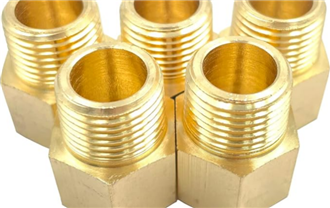
A high-pressure connector usually contains sealing features such as:
● O-ring grooves
● Precision sealing faces
● Threaded connection areas
● Internal coolant channels
Small machining errors on these areas may affect sealing compression and create leakage risks.
Our CNC machining process focuses on controlling:
● Groove dimensions
● Surface finish quality
● Thread accuracy
● Connector alignment
This ensures stable assembly performance and reliable coolant flow.
For general information about fluid system engineering and energy technologies, engineers can refer to resources from the U.S. Department of Energy:
https://www.energy.gov/
The manufacturing process typically includes:
Design Review → Material Confirmation → CNC Turning → CNC Milling → Thread Machining → Sealing Groove Machining → Deburring → Cleaning → Inspection → Pressure Testing
During machining, key operations include:
● Turning the connector body geometry
● Creating internal and external flow paths
● Machining threaded interfaces
● Producing sealing grooves
● Removing machining burrs from coolant passages
After machining, inspection equipment is used to verify critical dimensions before delivery.
Start Precision provides precision manufacturing support for customized metal components through CNC machining capabilities.
Pressure testing is essential for validating connector reliability.
Depending on customer requirements, testing may include:
● Leak testing
● Pressure holding tests
● Burst pressure testing
Burst testing evaluates whether the connector structure can withstand pressure beyond normal operating conditions. This process helps identify potential design weaknesses and confirms the safety margin of the component. A complete inspection process ensures that connectors can perform reliably in demanding environments.
High-pressure liquid cooling connectors are commonly used in:
● Electric vehicle battery cooling systems
● Power electronics thermal management
● Energy storage cooling systems
● Industrial equipment cooling
● Data center liquid cooling solutions
These industries require compact designs, stable sealing performance, and consistent manufacturing quality.
A customer required a lightweight liquid cooling connector for an electric vehicle battery system. The connector needed to handle repeated pressure changes while maintaining long-term sealing reliability.
The manufacturing solution included:
● Optimizing connector wall thickness based on pressure requirements
● Selecting corrosion-resistant aluminum material
● Machining accurate sealing grooves
● Controlling thread connection accuracy
● Performing leakage and pressure verification
Through optimized CNC processing and inspection procedures, the final connector achieved stable coolant transmission and reliable installation performance.
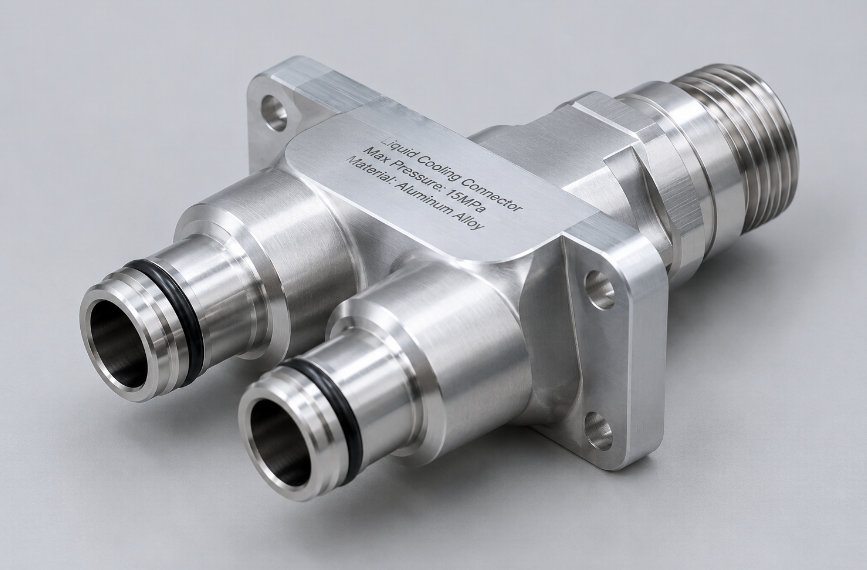
High Pressure Liquid Cooling Connector Machining requires more than basic CNC processing. Successful production depends on integrated control of structural design, material selection, sealing accuracy, machining technology, and pressure testing.
From prototype development to production manufacturing, Start Precision supports customers with customized CNC machining solutions for demanding liquid cooling applications.
Contact us to discuss your manufacturing needs and develop reliable high-pressure liquid cooling connector solutions.
Frequently Asked Questions (FAQ)
A high-pressure connector requires proper wall thickness design, strong materials, accurate sealing structures, and verified pressure performance.
Aluminum alloys, stainless steel, and copper alloys are commonly selected according to strength, corrosion resistance, and thermal requirements.
Burst testing helps verify structural strength and confirms whether the connector can withstand unexpected pressure conditions.
Yes. Connectors can be customized based on CAD drawings, materials, sealing methods, dimensions, and application environments.
Add: Building 3No.277 Zhen'an Middle Road, Chang'an Town,Dongguan,Guangdong, China
Tel:+86-769-82855591
Copyright © 2019 All Rights Reserved Dongguan Start Precision Technology Co., Ltd. Tel: +86-769-82855591
Add: No. 277 Zhen'an Middle Road, Chang'an Town, Dongguan, Guangdong, China



 中文版
 English