Custom Liquid Cooling Connector Machining Services with Surface Treatment
Date:2026-09-28Article editor:Starting Point PrecisionViews:175Liquid cooling connectors are small but critical components in thermal management systems. They provide a reliable connection between cooling plates, hoses, manifolds, and other fluid-carrying components. For demanding applications, Custom Liquid Cooling Connector machining must control dimensional accuracy, sealing geometry, internal passages, and surface condition at the same time.
A properly selected surface treatment can further improve corrosion resistance, wear performance, and service durability. For CNC-machined aluminum connectors, anodizing is commonly considered because it forms a protective oxide layer and can provide a consistent finished appearance.
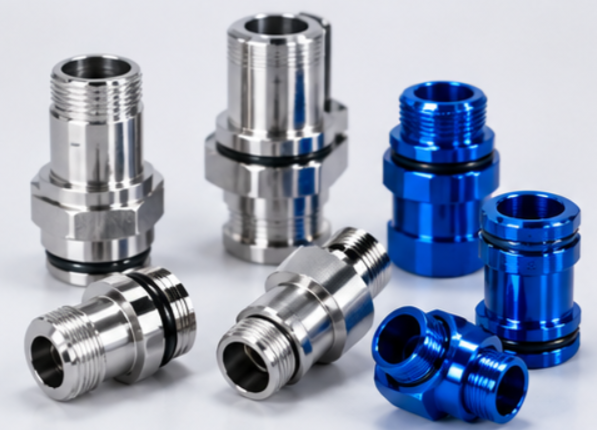
Why Surface Treatment Matters for Liquid Cooling Connectors
A connector may operate in contact with coolant, moisture, pressure fluctuations, and repeated assembly. Surface treatment therefore needs to match the material and functional requirements.
Common options include:
● Anodizing: Suitable for aluminum connectors requiring corrosion protection and improved surface durability.
● Hard anodizing: Used when greater wear resistance is required.
● Passivation: Applicable to stainless steel components to improve corrosion resistance.
● Electroless nickel plating: Can provide a functional surface for selected metal applications.
● Polishing or bead blasting: Used when controlled appearance or surface texture is required.
For precision connectors, coating thickness must also be considered because surface treatment can affect threads, sealing areas, and tight dimensional fits.
Key Parameters for Custom Liquid Cooling Connector Machining
● Material: Aluminum 6061-T6, stainless steel, copper alloys, or specified engineering materials
● Machining: CNC turning, CNC milling, drilling, threading, groove machining
● Critical Features: Threads, O-ring grooves, sealing faces, mounting interfaces, internal passages
● Surface Finish: Specified according to sealing, appearance, friction, and application requirements
● Surface Treatment: Anodizing, hard anodizing, passivation, plating, or other specified finishes
● Inspection: Dimensional inspection, thread verification, surface inspection, and leak testing when required
CNC Machining and Surface Treatment Process
The manufacturing route is designed around the connector's geometry and sealing requirements:
The connector manufacturing workflow begins with CAD requirement analysis and material setup, followed by primary turning and fluid-port machining. Precision milling and sealing-groove finishing are then completed before deburring and surface treatment. Each part undergoes dimensional verification and, when specified, leak or pressure testing before final release.
The machining stage establishes the critical dimensions before finishing. Particular attention is given to O-ring grooves, threaded interfaces, connector faces, and internal fluid passages.
After machining, parts are thoroughly cleaned and prepared for the specified surface treatment. For anodized aluminum components, treatment parameters must be coordinated with dimensional requirements because the oxide layer can influence precision mating features.
Precision Equipment for Connector Manufacturing
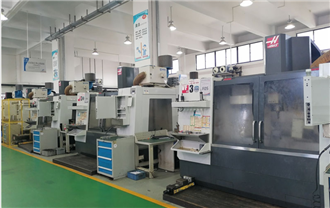
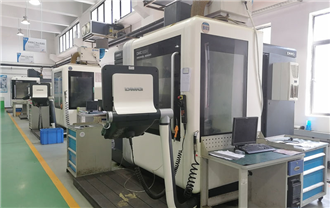
For complex connector geometries, Start Precision lists equipment including a Germany DMG HSC 75 linear five-axis machining center, DMG DMC 835V vertical machining centers, Mazak VCN-510C, HAAS VF3, and CNC turning centers such as DMG CTX beta 800 and TAKIZAWA NEX-108.
These machines support turning, milling, angled features, drilling, and complex geometries required by customized cooling connectors.
Equipment Photos, Workshop and Certification
For technical sourcing, visual evidence can help customers evaluate manufacturing capability. Recommended article images include:
● Equipment photo: DMG HSC 75 linear five-axis machining center
● Workshop photo: CNC turning and milling operations
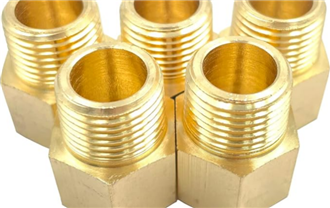
● Finished-part photo: Machined liquid cooling connector with surface treatment
● Quality photo: Inspection equipment and dimensional verification
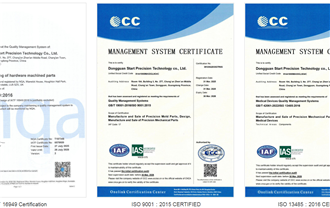
● Certification photo: Applicable quality certificates and inspection documentation
The Start Precision precision-machining page provides equipment and processing images, while its website also provides a dedicated certificate section.
Example: Surface-Treated Aluminum Cooling Connector
For a customized aluminum cooling connector used between a liquid cooling plate and flexible tubing, the machining process can combine precision turning, drilled fluid passages, threaded connections, and an O-ring sealing groove. After deburring and cleaning, an appropriate anodizing treatment can be specified to improve surface protection.
Before shipment, critical dimensions and threads are inspected. If the connector forms part of a sealed cooling circuit, leak testing can be added to verify fluid-path integrity.
Conclusion
A reliable Custom Liquid Cooling Connector requires more than accurate CNC machining. Material selection, sealing geometry, machining strategy, surface treatment, and inspection must work together. Integrating these stages into one manufacturing workflow can simplify quality control and provide finished connectors ready for assembly.
For precision CNC machining and surface-treated cooling components, visit Start Precision.
1. What materials can be used for Custom Liquid Cooling Connector machining?
Common choices include aluminum alloys, stainless steel, copper alloys, and other materials specified according to coolant compatibility, pressure, temperature, and mechanical requirements.
2. Which surface treatment is suitable for aluminum cooling connectors?
Anodizing and hard anodizing are common options. The appropriate process depends on corrosion resistance, wear, appearance, electrical requirements, and dimensional tolerances.
3. Can surface treatment affect connector dimensions?
Yes. Surface-treatment layers can influence threads, sealing grooves, mating interfaces, and other precision features. These effects should be considered during machining and finishing design.
4. Can liquid cooling connectors be leak tested?
Yes. Leak testing can be incorporated when the connector is part of a sealed liquid-cooling circuit. The test method and acceptance criteria should be defined according to the application.
5. Can Start Precision manufacture low-volume custom connectors?
Custom CNC machining can be arranged for prototype, low-volume, and production requirements. The final process depends on geometry, material, tolerance, surface treatment, and quantity.

Add: Building 3No.277 Zhen'an Middle Road, Chang'an Town,Dongguan,Guangdong, China
Tel:+86-769-82855591
Copyright © 2019 All Rights Reserved Dongguan Start Precision Technology Co., Ltd. Tel: +86-769-82855591
Add: No. 277 Zhen'an Middle Road, Chang'an Town, Dongguan, Guangdong, China



 中文版
 English