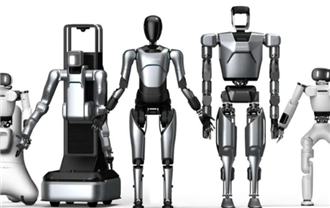
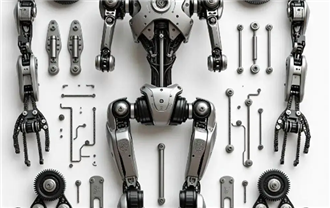
Building a humanoid robot involves fitting numerous mechanical and electronic systems into a body with limited internal space. The frame must accommodate joint drives, wiring, sensors, and fastening hardware without becoming unnecessarily bulky. Structura
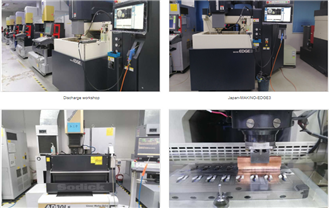
Sinker EDM, also called ram EDM, removes material with controlled electrical discharges rather than cutting force. For copper, this matters because copper’s high conductivity—documented by the Copper Development Association —supports electrodes, terminals
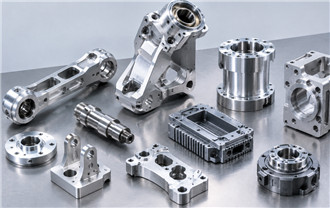
Custom copper components with complex geometry are designed for applications that require more than simple holes, flat surfaces, or standard cylindrical profiles. They may incorporate curved contours, recessed contact areas, intersecting passages, narrow
A humanoid robot must coordinate multiple joints to perform actions such as walking, reaching, bending, and maintaining balance. Each joint contains mechanical interfaces that connect moving structures while supporting repeated loads and precise positioni
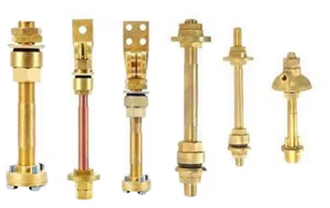
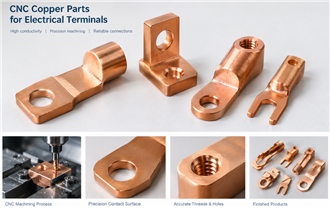
Electrical terminals need more than a conductive material. Their contact surfaces, mounting features, dimensions, and connection geometry must remain consistent during assembly and service. CNC copper parts for electrical terminals provide a practical sol
Copper is widely selected for applications requiring outstanding electrical conductivity, thermal transfer capability, and corrosion resistance. From electrical components to advanced cooling systems, copper parts often need complex geometries and stable
Humanoid robots must move like humans—smoothly, accurately, and reliably. Unlike fixed industrial robotic arms, they depend on compact, lightweight joints that handle dynamic loads. At the core of every natural step, grasp, and gesture areprecision gears.
The evolution of humanoid robots requires mechanical structures that support flexible movement, easy upgrades, and long-term operation. Unlike industrial robot arms designed for fixed manufacturing tasks, humanoid robots require human-like structures with
Copper is not simply a soft metal. It conducts heat and electricity, resists corrosion, and machines differently from steel or aluminum. The real challenge is not only cutting copper; it is keeping a project on scope, on tolerance, and on schedule. That i
Copper’s conductivity, ductility, and corrosion resistance make it ideal for electrical, thermal, and industrial parts. But copper is gummy, thermally conductive, and sensitive to poor tooling choices. Rapid quotation only works when it is built on real p
Copper is widely selected for components that require excellent electrical conductivity, thermal transfer, and corrosion resistance. Typical applications include electrical terminals, busbars, connectors, heat-transfer components, electrodes, and precisio
Copper is widely used for electrical components because of its excellent electrical conductivity and thermal performance. However, producing reliable CNC machined copper parts requires more than selecting a conductive material. Copper grade, machining con