
Why Rapid Delivery Matters for Humanoid RobotsHumanoid robot development moves through frequent design revisions, prototype testing, and mechanical optimization. A delayed component can hold up an entire joint, actuator, or structural assembly. Custom Rob
As aerospace platforms push thermal limits, custom liquid cooling plates have become essential for managing heat from avionics, power electronics, and directed-energy systems. These plates must perform under extreme conditions while meeting strict weight
Humanoid robots require highly accurate mechanical assemblies to achieve stable movement, precise control, and long-term reliability. Unlike industrial robot arms, humanoid robots are designed to imitate human motion, which creates higher requirements for
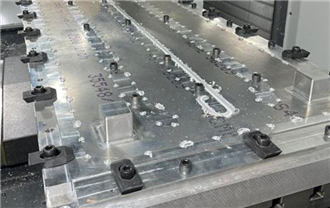
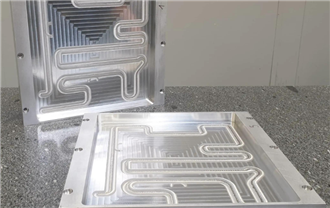
Developing a new thermal management system often requires functional prototypes before moving to larger production volumes. Liquid Cooling Plate Machining provides engineers with customized cooling plates for evaluating thermal performance, channel layout
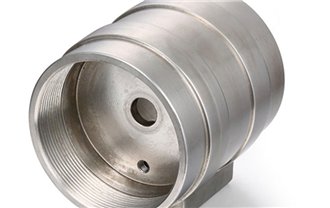
Transmission shafts are essential mechanical elements in humanoid robots, responsible for transferring torque and maintaining coordinated movement between joints and actuators. Unlike industrial robotic arms, humanoid robots require compact, lightweight,
As power densities rise in data centers, electric vehicles, and industrial power electronics, cold plate liquid cooling has become the preferred thermal management method. At the heart of every reliable cold plate loop sits a component often overlooked un
As humanoid robots transition from research labs to real-world applications, the demand for advanced materials that balance strength, durability, and low weight has never been greater. The joints—responsible for movement, precision, and load-bearing—are a
Introduction Humanoid robots combine cameras, IMUs, force sensors, proximity sensors, and other sensing devices throughout their compact mechanical structures. These sensors require stable and accurately positioned mounting interfaces to support reliab
Humanoid robots are moving from research laboratories toward real-world applications such as healthcare assistance, smart manufacturing, logistics, and service environments. Behind every advanced humanoid robot is a complex system of precision mechanical
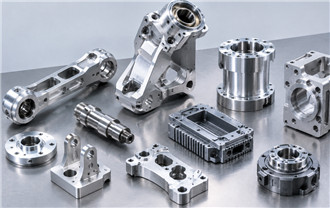
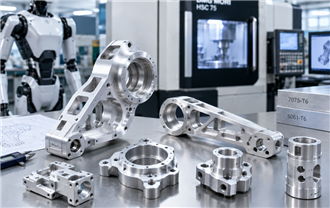
Humanoid robots require a careful balance between low mass, structural rigidity, durability, and machining accuracy. Components such as joint housings, arm links, brackets, actuator mounts, and end-effector interfaces can benefit from lightweight alloys b
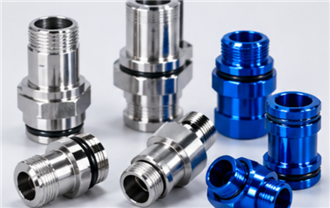
Liquid cooling connectors are small but critical components in thermal management systems. They provide a reliable connection between cooling plates, hoses, manifolds, and other fluid-carrying components. For demanding applications, Custom Liquid Cooling
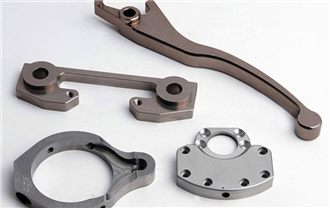
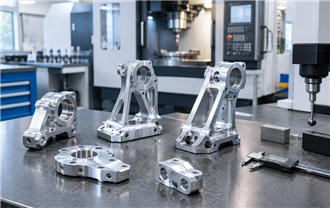
Bipedal humanoid robots rely on precise mechanical structures to achieve stable walking, accurate movement, and efficient energy control. Components such as joint brackets, motor mounts, and support frames must maintain high strength while minimizing weig